
Postdoctoral researcher position at the University of Oulu

University of Oulu

Deadline: December 15, 2023

We seek for a highly motivated and skilled postdoctoral researcher to join the lab of Associate Professor Anu Eskelinen to work in the Academy of Finland funded project Global Change Effects on Plant Metacommunities and Ecosystem Functioning. The position is for two years.

Brief description of the project and position
In this project, we investigate how global changes affect plant biodiversity and ecosystem functioning in a naturally fragmented grassland system in the archipelago of southern Finland and what are the roles of dispersal and spatial context mediating community and ecosystem responses to global changes. We combine spatially replicated global change treatments with plant functional traits and information about habitat size and connectivity, and integrate these with measuring plant community diversity and composition, multiple ecosystem functions and microbial diversity.
While being based at the University of Oulu, the successful candidate will work in collaboration with an international researcher team, including collaborators, for example, from University of Tartu, Estonia, University of California Davis, US, German Centre for Integrative Biodiversity Research iDiv, Germany, and University of Helsinki, Finland.

Your tasks

  • Plan, organize, and conduct field work in a grassland metacommunity system in the archipelago of southern Finland, Åland Islands, including establishing experimental global change manipulations
  • Use existing plant community and trait data to model species occurrences and plant diversity in a metacommunity, and/or study links between plant biodiversity and ecosystem functioning in a metacommunity
  • Publish research results in high-ranked scientific journals
  • Participate BSc and/or MSc level teaching in Plant Biodiversity
  • Co-supervise MSc and/or doctoral students and field assistants

What we expect from you

  • Doctoral degree in plant community ecology or equivalent field with background in plant biodiversity research (obtained within the past 10 years) and demonstrated ability to prepare independently high-impact manuscripts for international journals
  • Excellent written and spoken English
  • Ability to travel and do field work in an international team
  • Excellent communication and team skills
  • Excellent and demonstrated statistical skills using software R
  • Experience in some of the following: plant biodiversity research, experimental plant community ecology, global change research, ecosystem functioning, trait-based ecology
  • Good grassland plant identification skills

Assessment of the applicants will be based on, acknowledging the content of the job, 1) overall fit to the above profile, 2) scientific publications, 3) motivation, 4) previous work experience, 5) national and international mobility and networking skills, and 5) other academic activities and merits.

We offer

  • Inspiring, novel, and ambitious project and study questions/system
  • Enthusiastic and international researcher team and mentoring
  • Possibilities for research visits and integration to a larger international community
  • Possibility for a flexible combination of presence work and remote work (this can be negotiated, depending on the situation of the applicant and project demands)
  • Full benefits provided by the University of Oulu to university employees, including free time corresponding to holidays and free occupational health care services. The successful candidate will receive also benefits provided by the Finnish government to residents, for example possibility to obtain access to the national healthcare system, tax benefits for employees with children, and high-quality affordable childcare services
  • Workplace that promotes flexibility and work-life balance. Read more about working with us.
  • Our Buddy Programme and Spouse Network support you and close-ones in settling into Oulu.
  • Wellness benefit ePassi covering sport, culture and well-being. Read more about other staff benefits.
  • Finland is one of the most livable countries in the world, with a high quality of life, safety, excellent education system, and competitive economy.

How to apply

Apply online latest on Friday 15.12.2023 at 23:59 (Finnish local time). Only applications sent via the online system will be considered. Please include the following attachments in your application (all in English):
1. Cover letter (describing experience relevant to this position, research interests, motivation, general career goals and why this position is of interest to you)
2. Curriculum Vitae
3. List of publications
4. Copies of all relevant certificates (including doctoral degree certificate)
5. Contact information of two persons available for recommendation

For further information, please contact Anu Eskelinen.

PhD fellow in Climate Change Ecology

Deadline: Nov 15, 2023

The Department of Arctic and Marine Biology (AMB) at UiT – The Arctic University of Norway, Faculty of Biosciences, Fisheries and Economics (BFE) seeks a highly motivated PhD fellow in Ecology, specializing on climate change ecology.

The workplace is UiT in Tromsø. The position is affiliated with the research group Northern Populations and Ecosystems and will be associated with the research project Arctic Forest Futures – An integrative approach to understanding and anticipating ecological transitions in the forest-tundra ecotone, funded by the Research Council of Norway for 2024-2026, as well as with the Climate Ecological Observatory for Arctic Tundra (COAT).

Arctic Forest Futures is a collaborative project between UiT, and strong national (NINA, MET, NORCE, UiO) and international research partners (WSL, UniGe, CSIRO, EPFL). The prospective candidate will work with researchers from this project group and from COAT to deliver cutting-edge tools for the knowledge-based management of northern forest ecosystems in the face of climate change. Supervision will be offered from UiT with co-supervisors from NINA and UiO as relevant.

The position is for a period of four years. The nominal length of the PhD program is three years. The fourth year is distributed as 25 % each year and will consist of teaching and other duties. The objective of the position is to complete research training to the level of a doctoral degree. Admission to a PhD program is a prerequisite for employment, and the program period starts on commencement of the position. The PhD candidate shall participate in the faculty’s organized research training, and the PhD project shall be completed during the period of employment. You must be able to start in the position within a reasonable time and no later than March 1st 2024.

Deadline for application: Nov 15, 2023

Read more here: https://www.jobbnorge.no/en/available-jobs/job/250881/phd-fellow-in-climate-change-ecology#?p=1&reset=1

PhD scholarship on spatial patterns of plant-herbivore feedback in Greenland

Deadline: October 15, 2023

A 3-year PhD fellowship in terrestrial biology is offered by the Greenland Institute of Natural Resources, GINR (www.natur.gl).

The PhD-project will build a framework to test different scenarios changing major factors affecting the feedback loop between herbivores’ distribution and their foodscape. This feedback loop would consider how caribou distribution affects the main plant functional groups (structure and productivity) through herbivory (grazing, trampling, fertilizing) and, in turn, how these altered vegetation maps shift caribou distribution. The candidate work will enhance knowledge on how the main drivers – environment (climate, soil properties), land use (hunting, infrastructure), herbivore’s density and competition for resources with other herbivore species – modify these plant-herbivore interactions.

You can find more information here. If you have any questions, please get in touch with Mathilde Le Moullec.

PhD in biodiversity and ecosystem functioning in boreal forest and tundra

Deadline: Jan 8 2023

A fully-funded 4-year PhD researcher position in biodiversity and ecosystem functioning in boreal forest and tundra is available within the recently established research group Northern Biodiversity and Ecosystem Functioning (NorEcoFun) at the University of Helsinki.

You can find more information on the project and how to apply here. Deadline for applications is January 8, 2023 and expected starting date is ideally in March 2023, but can be negotiated.

For more details, get in touch with Elina Kaarlejärvi.

Graduate PhD Assistantship Available: Climate Change Responses in Coastal Arctic Wetlands

Deadline: December 15, 2022.

A PhD student position with 4 years of funding is available to participate in an NSF-funded project examining the interaction of multiple climate change forcings on vegetation and ecosystem functioning in Arctic wetlands through field and laboratory research. Field work is conducted in the Yukon-Kuskokwim Delta in Alaska and will involve an experiment with flooding, warming, and herbivory treatments followed by measurements of vegetation responses, and CO2 and CH4 gas fluxes. The successful candidate must start no later than 1 May 2023 (although 1 April 2023 is preferred), and be willing to work 3 months each summer (number of field seasons is contingent on project development) in an extremely remote setting in western Alaska (e.g., no internet service, no running water). This work is a collaboration between faculty at South Dakota State University, the University of Colorado-Denver and Utah State University, and the student would interact with personnel from each location. The successful candidate will receive a tuition waiver; a 12-month stipend ($24,000/yr); and room, board and travel expenses during the summer field seasons.

Required Qualifications: (1) A BS/BA degree in Biology, Ecology, Environmental Science, Natural Resource Management, or related field by December 2022; (2) strong academic record including previous research experience; (3) quantitative skills including introductory R; (4) excellent written and oral communication skills.

Preferred Qualifications: (1) Prior experience conducting field research in or living in remote settings for extended periods; (2) experience with ATVs and small craft boats: (3) experience in plant identification; (4) experience with LICOR or other gas exchange systems; (5) MS degree preferred.

Utah State University is a highly selective, public, land-grant university and is classified as a Carnegie R1 Research University. The main campus is located in Logan, a community of 100,000 people. The Beard Lab is committed to supporting and advancing diversity in STEM. Applications from members of historically underrepresented groups are strongly encouraged.

To apply, please send a single PDF with (1) CV; (2) a letter describing how you meet the required qualifications and any preferred qualifications, research interest, and career goals; (3) unofficial transcripts; and (4) contact information for three professional references to Karen Beard (karen.beard@usu.edu). Application deadline is December 15, 2022.

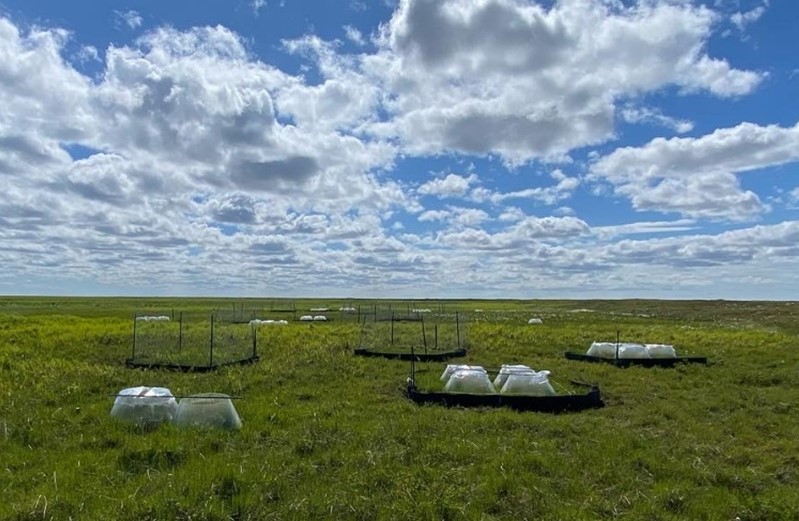
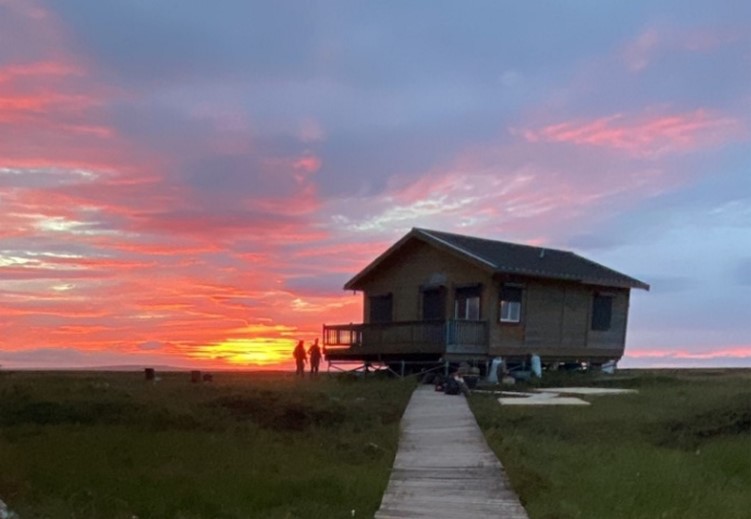
Research station in Yukon-Kuskokwim Delta, Alaska

PhD position in bryophyte ecology with the Faculty of Life and Environmental Sciences

Deadline for applications is November 18, 2022.

The Faculty of Life- and Environmental Sciences at the University of Iceland is seeking a motivated candidate for the project: Bryophytes as ecosystem engineers in a changing tundra. The position is funded by the University of Iceland Research Fund for three years. The PhD project will be linked to larger funded projects.

Bryophytes are a major component in many tundra plant communities and potentially have multiple effects on the physical environment of tundra ecosystems as well as providing a habitat for diverse organisms building complex food webs. The aim of the PhD project is to investigate bryophyte functional traits, including the microbial/micro faunal traits, that drive ecosystem processes in tundra rangelands of Iceland (above potential tree line), and how they vary between Bryophyte Functional Groups, climatic condition, and herbivory. Within that framework the successful candidate will be given the opportunity to formulate relevant research questions.

The position is funded by the University of Iceland Research Fund for three years. The PhD project will be linked to larger funded projects.

More information can be found here: https://euraxess.ec.europa.eu/jobs/845469

Field assistant in the Eastern Icelandic Highlands

Mathilde Defourneaux is looking for a field assistant from the 25th of August to the 10th of September 2022. The field assistant will help collect data for Mathilde’s PhD project which is part of a bigger international project (TUNDRAsalad), looking at the effect of changes in herbivore communities on the functionality of the Tundra. The PhD focuses on Iceland and aims to: 1) estimate the contribution of the different herbivores to the nutrient pool in the Icelandic highlands (how much nutrients they contribute to the system and how their movement is actively affecting the nutrient redistribution in the landscape), and 2) investigate how different sources of dung can affect dung decomposition and the nutrient transfer to the soil, as well as the invertebrates communities feeding on them. 

Fieldwork is conducted in the Eastern highlands, mainly in Fljótsdalshreppur and focuses on 4 main herbivore species (reindeer, sheep, pink footed goose and whooper swan). It involves various protocols from plants, soil and dung sampling for both nutrient and DNA analysis, as well as estimating primary productivity and herbivore offtake using point frame and exclusion cages. There is also an experiment set up to sample coprophagous invertebrates feeding on sheep and goose dung to estimate invertebrate contribution to dung removal. All fieldwork is conducted in the highlands of Iceland under various weather conditions, and it involves camping or staying in little huts, which can be challenging.

If anyone is interested, please contact Mathilde by email or reach her on her phone number (+354 8435313). She will be very happy to give you more details 🙂

Fieldwork in the Icelandic highlands

Master’s of Science in geospatial analyses of plant-herbivore interactions in Iceland, Department of Geography, University of Victoria

Deadline: August 1, 2022

We are seeking applications for a Master’s student to conduct geospatial analyses to document the cumulative impact of wild and domesticated herbivores in the highlands of Iceland and contribute to the development of tools for sustainable land management. The ideal candidate will have experience in geospatial analyses and a willingness to conduct fieldwork in remote sites in Iceland. Applicants will be expected to have a relevant Bachelor’s degree completed no later than May 2023 and be available to conduct fieldwork in summer 2023. The work will be conducted in collaboration with an international and interdisciplinary team of scientists, students and government partners. The position will be jointly supervised by Dr. Noémie Boulanger-Lapointe (UVic Geography) and Dr. Isabel C. Barrio (Agricultural University of Iceland).

Interested applicants should send a cover letter, CV and contact information for two references to Noémie Boulanger-Lapointe no later than August 1st, 2022. Cover letters should identify their motivations and highlight how previous academic and/or work experience are related to the advertised position. 

University of Iceland Post-doc grants

Would you be interested in developing a postdoc in Iceland? The University of Iceland offers 3-year post-doc grants for researchers who have obtained their PhD within the last seven years. It is open now for applications until December 2, 2021.

More information and how to apply here.

If interested in developing a project, you can get in touch with Ingibjörg Svala Jónsdóttir.