Bedding down in the storm: how muskoxen respond to high-Arctic winds

Extreme weather events pose significant energetic challenges to large herbivores, and the Arctic is warming faster than almost anywhere else on Earth. As a consequence, storms are intensifying and becoming more frequent across the region. Despite this, we know surprisingly little about how Arctic ungulates adjust their behaviour in response to high winds and episodic storm events and what the consequences might be for individual energy budgets and population performance.

This study used over a decade of GPS tracking data from 61 adult muskoxen in northeast Greenland, combined with data on wind speed, precipitation, terrain ruggedness, and vegetation type, to quantify how wind influences movement behaviour and habitat selection across both summer and winter.

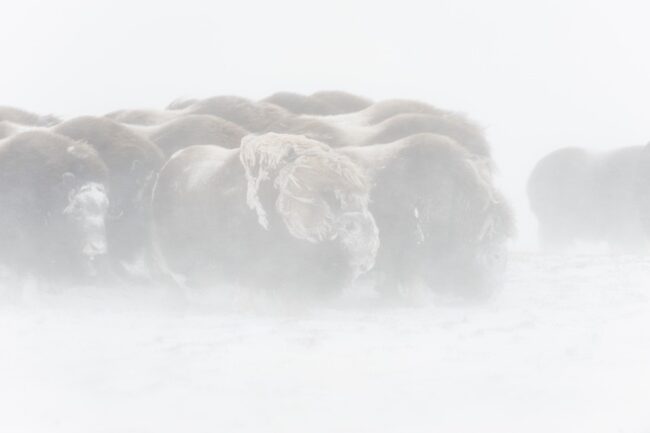
As wind speeds increased, muskoxen progressively shifted their time away from foraging and more towards resting. This reallocation of the time-activity budget was most pronounced during wet summer conditions, likely because rain compromises the insulating properties of their thick coat, raising thermoregulatory costs and making energy conservation especially important. Habitat selection patterns already present under calm conditions: a preference for areas with dense vegetation, became even more pronounced as winds strengthened, suggesting animals were actively seeking shelter rather than simply stopping in place.

During storm-force events, muskoxen spent markedly more time resting and less time foraging or relocating compared to individuals unaffected by the same storms. Crucially, there was no evidence of behavioural compensation in the days following a storm: time-activity budgets returned to pre-storm levels without any apparent increase in foraging effort to offset energy lost during the event.

The findings highlight an important and underexplored link between increasing storm activity and herbivore energy budgets in the Arctic. Understanding how repeated or severe storm exposure translates into effects on body condition, reproduction, and survival will be an important next step for assessing the vulnerability of muskox populations — and likely other Arctic ungulates — to ongoing climate change.

Key takeaway: Muskoxen respond to high winds and storms through a passive energy conservation strategy by bedding down in sheltered, vegetation-rich habitat rather than actively compensating for foregone foraging opportunities. This simple but effective short-term strategy may, however, carry cumulative energetic costs if storms become more frequent or prolonged under future climate scenarios.

Reference: van Beest, F.M., Hansen, L.H. & Schmidt, N.M. (2026) Riding out the storm: Behavioural responses of a large herbivore to high‑Arctic winds. Journal of Animal Ecology. DOI: 10.1111/1365-2656.70281


Photo: Muskoxen riding out a snowstorm in Zackenberg valley, northeast Greenland
© Lars H. Hansen

Large herbivore and vegetation ecology postdoc in Greenland

Deadline: May 31, 2026

The Greenland Institute of Natural Resources is searching for a 2-year postdoc studying herbivory and vegetation mapping on the Greenlandic tundra! 

The position is based in Nuuk for 2 years to focus on mapping herbivore vegetation quality and quantity across West Greenland and beyond. Ideally the candidate will be able to start working this summer. Preference will be given to candidates who speak Greenlandic and/or a Nordic language, but all candidates will be considered. The position will be primarily based at Greenland Institute of Natural Resources, and will work in close collaboration with the Scott Polar Research Institute. 

You can find more information and how to apply here.

Questions? Please contact Mathilde Le Moullec (malm@natur.gl) or Jeff Kerby (jk957@cam.ac.uk).

Herbivore decline switches a high Arctic plant community from top-down to bottom-up control

This study explores how a tundra plant community at Zackenberg in NE Greenland is influenced by both grazing animals and climate warming. The Arctic is a nutrient‑poor environment, so plants are strongly affected by changes in temperature and by herbivores such as muskoxen, which feed heavily on vegetation. As the Arctic warms, plant growth is increasing, but at the same time the numbers and movements of large grazing animals are changing. Understanding how these two forces interact is important for predicting future ecosystem changes.

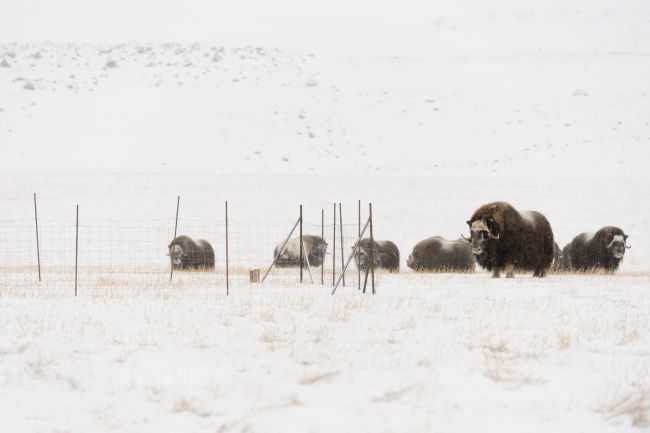
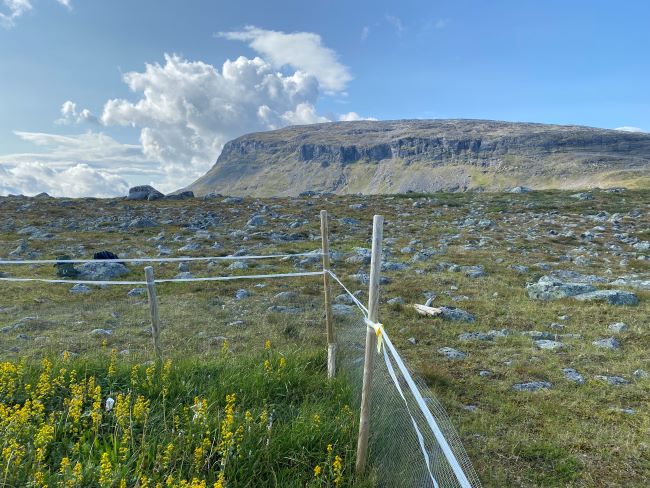
To investigate this, we conducted a 13‑year experiment in a wet Arctic fen, where we fenced off small areas to exclude muskoxen while leaving nearby areas open to grazing and trampling. Initially, the effects of excluding muskoxen were clear. After only five years, fenced areas held much more plant biomass and nitrogen, indicating that muskox grazing and trampling limit vegetation growth.

Over the longer term, however, these differences faded. Muskox numbers in the region declined during the study, reducing grazing pressure even in unfenced areas. Hence, 13 years after the establishment of the experiment, plant biomass and nitrogen pools had increased both inside and outside the fenced areas, and the treatment effect was no longer evident.

The declining muskox population at Zackenberg reduces its influence on the tundra vegetation, allowing climate warming to drive widespread increases in plant growth. These changes are likely to affect how nutrients and energy move through Arctic ecosystems, with possible knock-on effects in freshwater and coastal ecosystems.

Reference: Brockmann, F. K., Michelsen, A., Stewart, L., van Beest, F. M., Hansson, S. V., & Schmidt, N. M. (2026). Herbivore decline switches a high Arctic plant community from top-down to bottom-up control. Journal of Ecology, 114, e70308. https://doi.org/10.1111/1365-2745.70308

This study is also a contribution of the Nordic Borealization Network.


Text: Niels Martin Schmidt, Aarhus University / Picture: Muskox exclosures at Zackenberg, Lars Holst Hansen.

Large mammalian herbivores can influence arbuscular mycorrhizal fungal communities in the Arctic

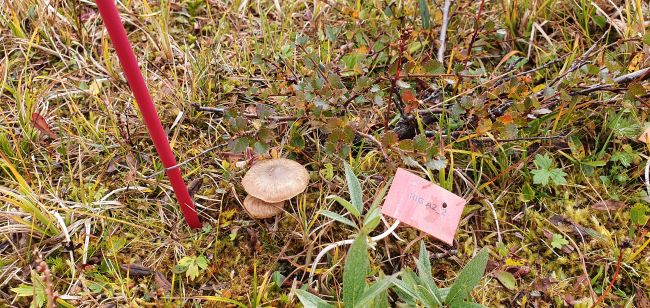
Mycorrhizal fungi are an integral component of carbon and nutrient dynamics in soils and may be especially important in Arctic and alpine communities undergoing large-scale changes due to climate change. Large mammalian herbivores may influence these microbes indirectly by selectively foraging on certain plant types, and directly through trampling and nutrient addition to soils. Our study utilized DNA amplicon sequencing within a network of large mammalian herbivore exclosures across the Arctic to evaluate the impact of these herbivores on three types of mycorrhizal fungi: arbuscular mycorrhiza (AM), ectomycorrhiza (EcM), and ericoid mycorrhiza (ErM).

Large mammalian herbivores influenced the AM community across the sites but did not have a consistent effect on the EcM or ErM communities. We also observed effects of pH and growing season temperature on AM fungal communities which may indicate that conditions are becoming more favourable for AM fungi in these regions. AM fungi are understudied in the Arctic as they are typically cold-limited, but with climate change they may have the potential to expand.

EcM and ErM fungal communities were primarily correlated with soil properties, such as δ15N signature, and may be more closely tied to nutrient conditions in the soil rather than indirect effects from higher trophic levels. Current investigations into how mycorrhizal fungal activity and production is correlated to herbivory and soil conditions is currently ongoing, along with a larger biogeographical synthesis of mycorrhizae in the Arctic.

Reference: Brachmann, C.G., Ryberg, M., Furneaux, B.R., Rosling, A., Ou, T., Ekblad, A., Abdulmanova, S., Barrio, I.C., Bret-Harte, M.S., Fritze, H., Gough, L., Hollister, R.D., Jónsdóttir, I.S., Kalttopää, O., Lindén, E., Mäkiranta, P., Olofsson, J., Partanen, R., Reid, K.A., Sokolov, A., Sujala, M.S., Sundqvist, M.K., Suominen, O., Tweedie, C.E., Young, A. and Björk, R.G. (2025), Impacts of large herbivores on mycorrhizal fungal communities across the Arctic. Ecography e08045. https://doi.org/10.1002/ecog.08045

Job opportunity with the Norwegian Polar Institute in Tromsø and Svalbard

Deadline: January 5, 2026

The Norwegian Polar Institute has a permanent position available as a researcher in terrestrial ecology/limnology. The position offers the opportunity to work on central Arctic research questions in an interdisciplinary research environment and to generate new knowledge on ecosystem and societal dynamics in a changing climate.

The position plays a key role in the Norwegian Polar Institute’s contribution to the Ny-Ålesund terrestrial flagship programme (NYSMAC) and involves developing and leading research projects in close collaboration with national and international partners. The research is based on data from and fieldwork in Ny-Ålesund and Kongsfjorden. 

The position is in NPI’s Research Department, Section for Terrestrial Ecology and Seabirds.

The workplace is Tromsø, but the position requires regular stays in Ny-Ålesund to follow up field activities and research collaborations.

You can find more information about the position and how to apply here. You can also contact Virve Ravolainen if you have any questions.

Neither long-term warming nor grazing influence the quality of reindeer summer pastures in Finnmark

Herbivores like reindeer need to navigate important fluctuations in the chemical composition of tundra plants over the summer season, as the quality of the vegetation changes.  In their study, Berthelot and collaborators investigate whether long-term differences in temperature and reindeer management influence the quality of reindeer’s summer forage.

Fanny Berthelot, lead author of the study says: “To our knowledge, this is the first study that uses a large spatial sampling design to assess long-term impacts of herbivory and climate on plant nutritional quality (i.e., both defense and nutrient concentrations). We found substantial variations in plant chemical composition between species, and part of this between-species variation was associated with plant functional groups. We also documented strong seasonal decreases in the concentrations of nutrients (Nitrogen and Phosphorus) and weaker seasonal increases in the concentrations of defense compounds (Silicon and Phenolics) over the summer. 

We also found a steeper seasonal decline in nutrient concentrations in warmer sites than in cooler sites, while defense compounds seemed not to be affected by the temperature. Interestingly, we found no evidence for long-term effects of reindeer grazing intensity on the average chemical composition of the plants. 

Our results indicate that what is likely to matter to reindeer in term of plant quality seems to be seasonal variations in plant chemical composition as well as species composition of the pastures.”

Reference: Berthelot, F., Stien, A., Soininen, E.M., Tveraa, T., Böhner, H. and Bråthen, K.A., 2025. Are Large‐Scale Differences in Temperature and Reindeer Management Regime Affecting the Quality of Reindeer’s Summer Forage? Ecology and Evolution15(11): e72500. https://doi.org/10.1002/ece3.72500


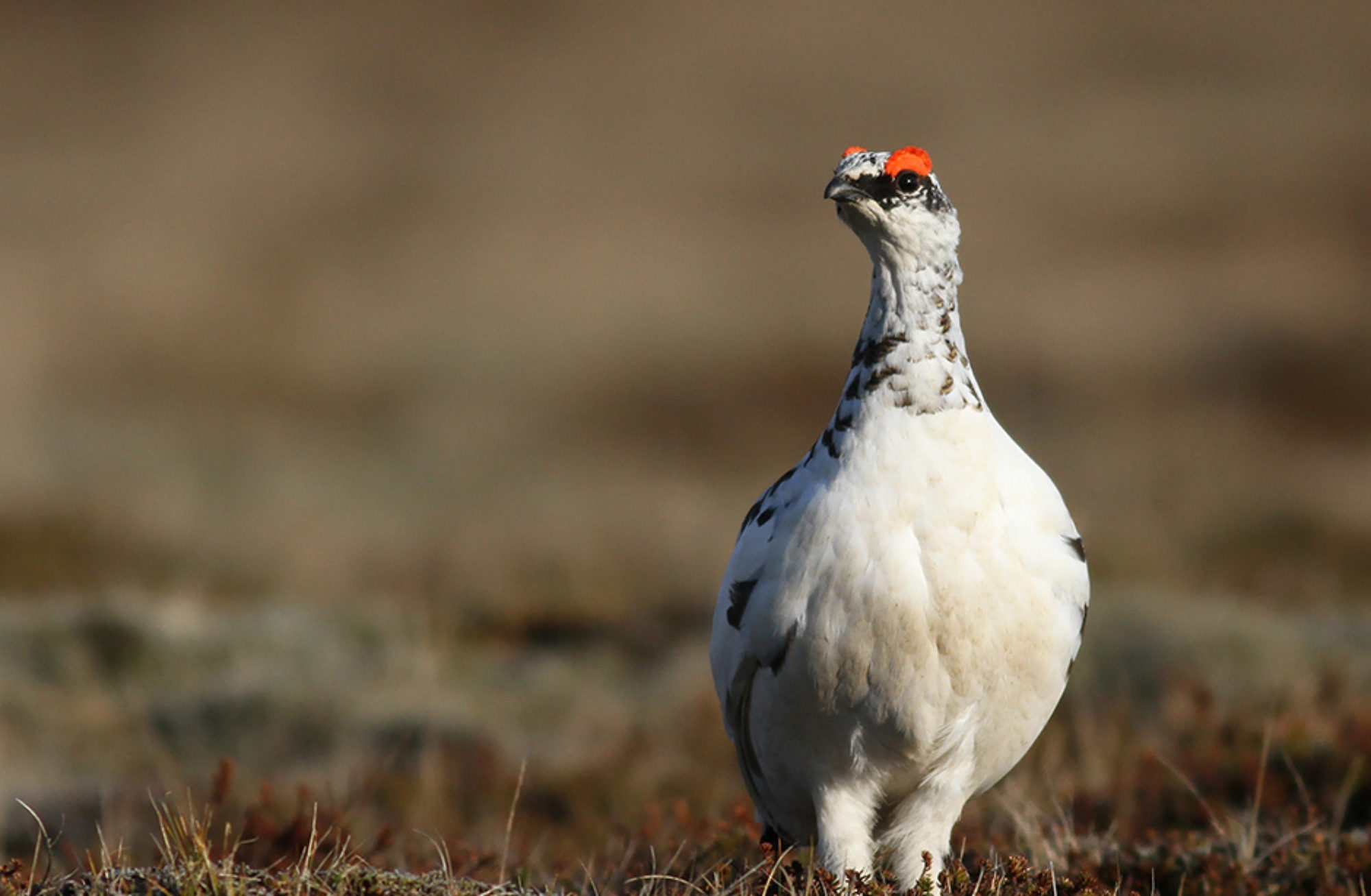
Photo credit Fanny Berthelot

PhD position in High Arctic plant ecology at the University of Victoria, Canada

Deadline: early January 2026 but as early as possible

The proposed project will investigate recent changes in High Artic vegetation on Ellesmere Island under the supervision of Dr. Boulanger-Lapointe in the Socio-Ecological Landscapes Lab, Dept. of Geography, at the University of Victoria. The research will involve extensive field work in remote environments to conduct vegetation surveys as well as dendrochronological and remote sensing analyses back in the lab. This position is part of a large interdisciplinary research initiative aimed at better understanding polar deserts.

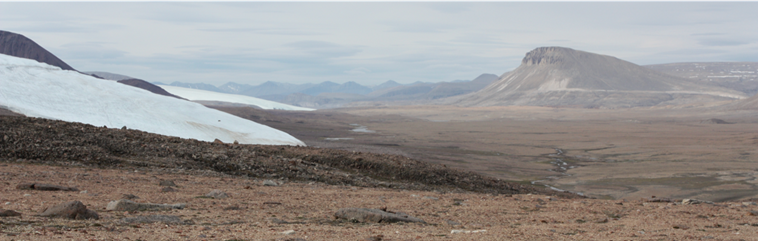
Sverdrup Pass, Ellesmere Island

You can find more information about this position in English and French here. The position would ideally start in September 2026. Review of applications is ongoing, and UVic graduate program application deadline is in early January.

If you have any question, please contact Noémie Boulanger-Lapointe.

PhD position at North Carolina State University

Deadline: December 19, 2025

Matteo Petit-Bon is recruiting a PhD student to join a project examining functional trait diversity and biogeochemical dynamics in rapidly changing tundra ecosystems.

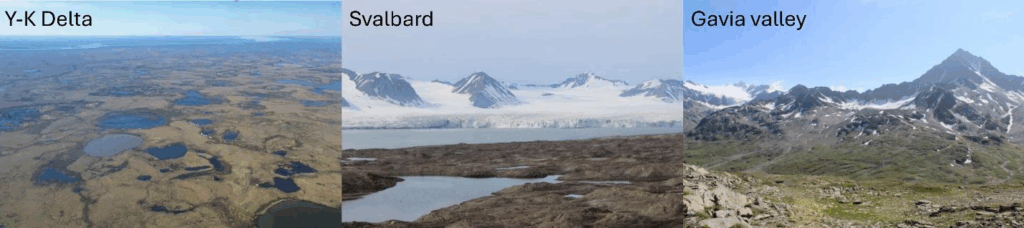
The research leverages long-term experimental platforms and comparative field studies across the Yukon-Kuskokwim Delta in Alaska, high-Arctic Svalbard, and the high-alpine Gavia Valley in Italy. The student will combine intensive field campaigns with laboratory analyses and quantitative ecological approaches at North Carolina State University.

You can find more details on the project scope, expected fieldwork, training environment, and application procedures here.

Interested candidates should email Matteo Petit Bon by Friday, 19 December 2025.

Long-term grazing exclusion and nutrient addition influence floral communities

Floral communities in tundra and montane grasslands are shaped by both grazing and soil nutrients. Our study, conducted at two northern sites as part of the Nutrient Network, shows how bottom-up and top-down forces interact to influence flower abundance and diversity.

Nitrogen addition generally reduced flower abundance, while phosphorus and potassium increased it. Excluding grazers boosted flower abundance, especially when combined with nutrients. Yet grazing also maintained species richness and diversity by keeping tall competitive plants in check.

These results highlight that management of grazing and nutrient inputs can strongly influence floral resources, with likely consequences for pollinators and the stability of high-latitude ecosystems. We are currently investigating the consequences of nutrient- and grazing-driven changes in floral resources on flower visitor assemblages.

The paper was recently published in Oikos Volume 2025, Issue 7.

Reference: Johanson, N., Olde Venterink, H., Carvalheiro, L. G., Eskelinen, A., & Virtanen, R. (2025). Long‐term nutrient addition and grazing exclusion determine flower abundance, diversity and community composition in high‐latitude grasslands. Oikos, e11562. https://doi.org/10.1002/oik.11562


Text and photograph: Nicolina Johanson, 2024

Postdoc position with the Nordic Borealization Network

Deadline: August 31, 2025

The NTNU University Museum is looking for an energetic and ambitious ecologist with excellent organizational and communication skills. The postdoctoral position is part of the Nordic Borealization Network, a NordForsk funded University Cooperation Network.

The Nordic Borealization Network strives to understand the implications of ongoing shifts in the forest-tundra biome boundary, that is, the borealization of Nordic terrestrial ecosystems. These shifts include the encroachment of woody species (treeline advance and shrub expansion), spread of non-native species, and changes in the biotic community composition and ecosystem structure and processes.

The postdoc will have a leading role in coordinating the network and will lead research and synthesis efforts in quantifying past and ongoing rates of borealization and possibly predicting future rates of borealization.

The successful candidate will build leadership expertise by being part of the management board of a large Nordic cooperation project. The position will provide a unique opportunity to be part of a large, active and multidisciplinary international team, participation in project meetings in different countries over the course of the project and opportunities for research visits with other partners and for student supervision.

This three-year position is based at the NTNU University Museum in Trondheim with Prof. James D. M. Speed and will interact with partners across the network.

You can read more about the position and how to apply here. If you have questions, please contact James Speed.