The sheep in wolf’s clothing? Recognizing threats for land degradation in Iceland using state‐and‐transition models

Many old stories include warnings to beware of nasty surprises that can appear harmless, like the wolf disguised as a sheep to better sneak up on the unknowing flock.  But what if the sheep themselves are actually the nasty surprise? In some parts of Iceland, extensive land degradation has been linked to overgrazing by livestock, as well as land clearing and natural processes including a harsh climate and frequent volcanic activity.  Identifying the factors responsible for ecosystem changes in these environments is essential for making good management decisions. In this paper, we use state-and-transition models, a simple representation using boxes and arrows, to describe ecosystem changes in Iceland over three periods with different human influence, from pre-settlement times to present days. The results suggest increasing complexity in recent decades where the models include stronger human influences, particularly sheep grazing.  These models can be used to make predictions about possible management interventions, so they can help farmers, managers and researchers identify realistic and achievable restoration goals.  

You can access the full publication here.

Reference: Barrio, I.C., Hik, D.S., Thórsson, J., Svavarsdóttir, K., Marteinsdóttir, B., Jónsdóttir, I.S. (2018) The sheep in wolf’s clothing? Recognizing threats for land degradation in Iceland using state‐and‐transition models. Land Degradation and Development 29:1714-1725.


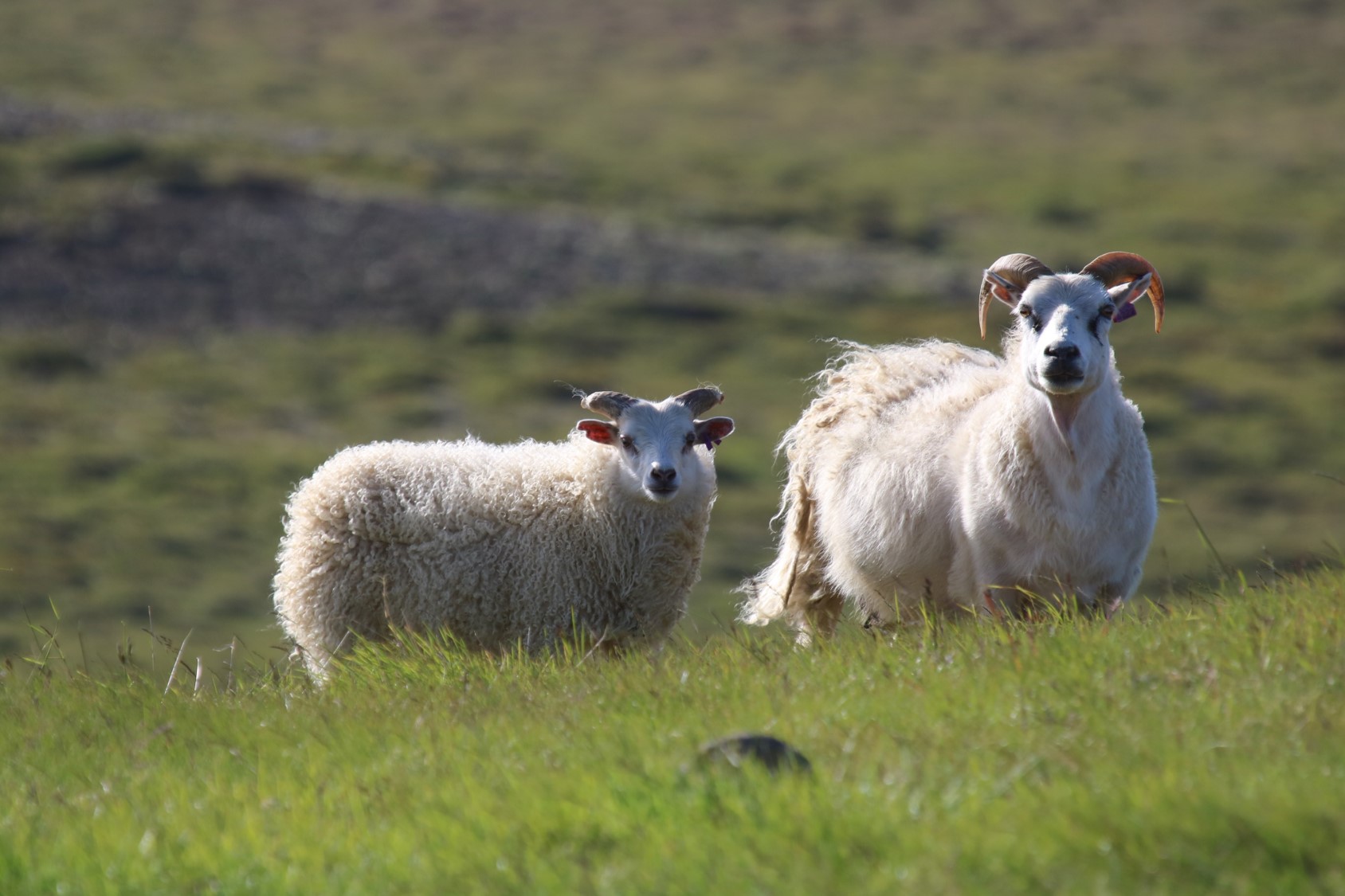
Picture: Icelandic sheep (photo: David Hik)

The role of plant–soil feedbacks in stabilizing a reindeer‐induced vegetation shift in subarctic tundra

Herbivores can have large impacts on the composition and functioning of plant communities and may even drive the vegetation towards a different state. For example, grazing by reindeer can result in a shift from relatively unproductive dwarf shrub vegetation to a more nutrient rich vegetation type dominated by herbaceous plants. We studied so-called historical milking grounds (HMGs) in northern Sweden: old reindeer herding sites that were subject to high numbers of reindeer for many centuries, up to a century ago. The high reindeer concentrations in the past caused the vegetation to shift locally to small meadow-like patches, which are still clearly discernible in the otherwise heath-and shrub dominated tundra, a century after their active use.One possible mechanism for the long-term stability of HMG vegetation is the interaction with biotic and abiotic components of the soil. More specifically, a positive interaction between the vegetation and associated soil biota would help stabilize the current vegetation and slow down invasion rates of other plant species. We tested this assumption by growing seedlings representative of HMG vegetation (Potentilla crantzii) and control vegetation (Betula nana) in soils from HMGs and control sites, in a climate chamber. By sterilizing the soils, we could separate the biotic from abiotic drivers, to try and understand the different growth responses of plants in different soils. We found that,although both the typical control- and HMG plant species grew well in HMG soils due to the increased nutrient availability, microorganisms in the HMG soil provided an additional benefit for the typical HMG plant species. This was mostly the case when soils from nutrient poor habitats (heath) were considered.In summary, we conclude that positive interactions between plants, soils and soil organisms can explain the long-term stability of vegetation shifts that were caused by reindeer many centuries ago.

You can access the full publication here.

Reference: Egelkraut, D., Kardol, P., De Long J.R., Olofsson, J. (2018) 
The role of plant–soil feedbacks in stabilizing a reindeer‐induced vegetation shift in subarctic tundra. Functional Ecology 32:1959-1971.

Limited dietary overlap amongst resident Arctic herbivores in winter: complementary insights from complementary methods

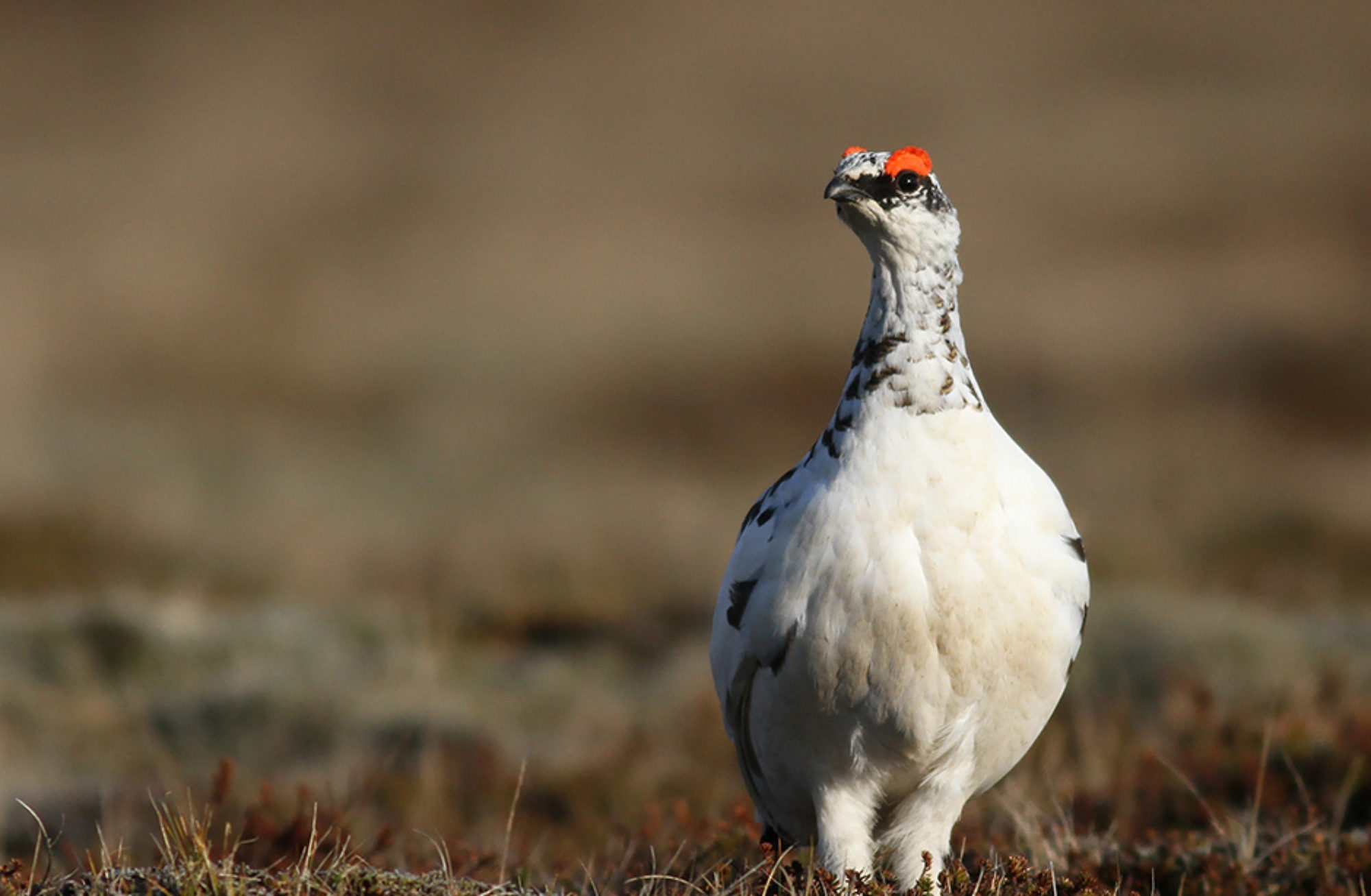
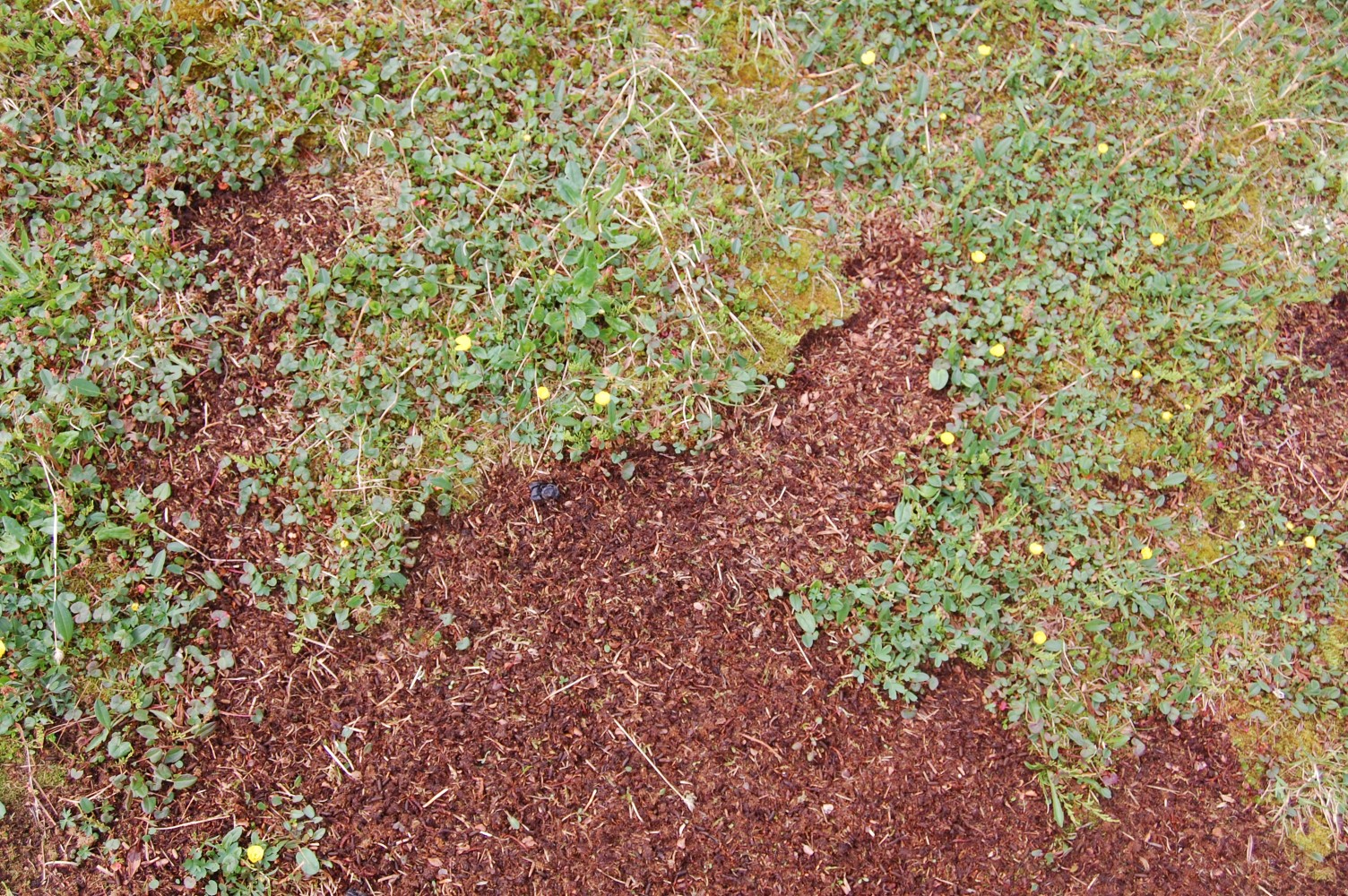
Snow can limit access to food during winter for resident Arctic herbivores, forcing them to aggregate in the few patches with limited snow. This study used molecular analysis and stable isotope ratios of carbon and nitrogen of fecal samples of Arctic hare, rock ptarmigan and muskox in High Arctic Greenland to assess their diet overlap, and if this overlap increased as winter progressed. The results show that despite foraging in the same areas and generally feeding on the same plant taxa, the quantitative dietary overlap between these three herbivores was limited. This may be attributable to species-specific consumption rates of plant taxa.

You can read the full article here.

Reference: Schmidt, N.M., Mosbacher, J.B., Vesterinen, E.J., Roslin, T., Michelsen, A. (2018) Limited dietary overlap amongst resident Arctic herbivores in winter: complementary insights from complementary methods. Oecologia 187:689–699.


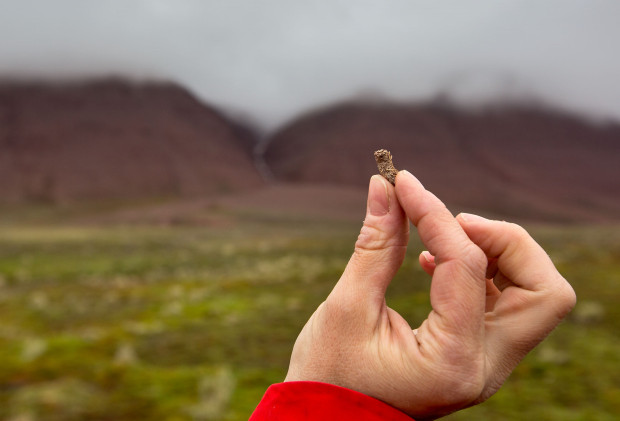
Picture: Fecal pellet (photo: Lawrence Hislop, Norwegian Polar Institute)

Looking for funding

Isabel C Barrio is planning on applying for funding for HN-related activities in the next call of the Icelandic Research Fund. Deadline for these applications will be in June 2019, but it is worth thinking ahead! Some of the types of grants include PhD and postdoc funding. If you are in a position to apply for these grants and you would be interested in developing a HN-related project in Iceland (or know somebody who might be), please get in touch with Isabel.

HN meeting in Yamal 2019

A dedicated HN meeting was held in Yamal 19-21 September 2019.

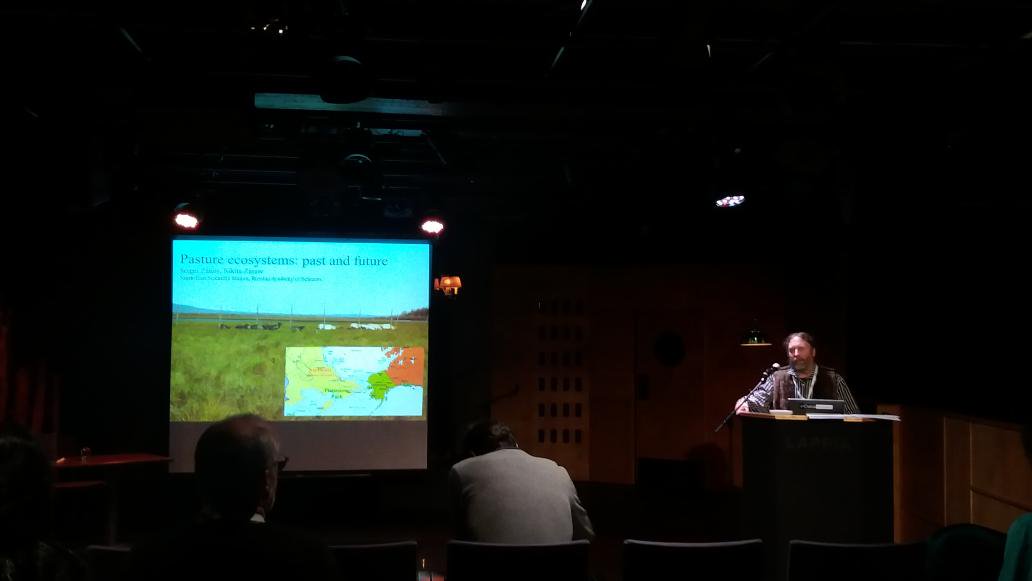
The meeting consisted of parallel workshops on projects initiated within the Herbivory Network, including the development of standardized protocols and work on data from experimental sites in Yamal, but also provided some space for discussion of new ideas and brief presentations of ongoing projects. The meeting also included a public lecture on herbivory in tundra ecosystems, open to the public, and an amazing field trip to a low arctic long-term monitoring site in Erkuta.

The meeting was hosted by the Arctic Research Station of the Institute of Plant and Animal Ecology of the Ural Branch, Russian Academy of Sciences (more info about the station in English and Russian). The station is situated in the rapidly developing town of Labytnangi, in the Yamal-Nenets Autonomous District.

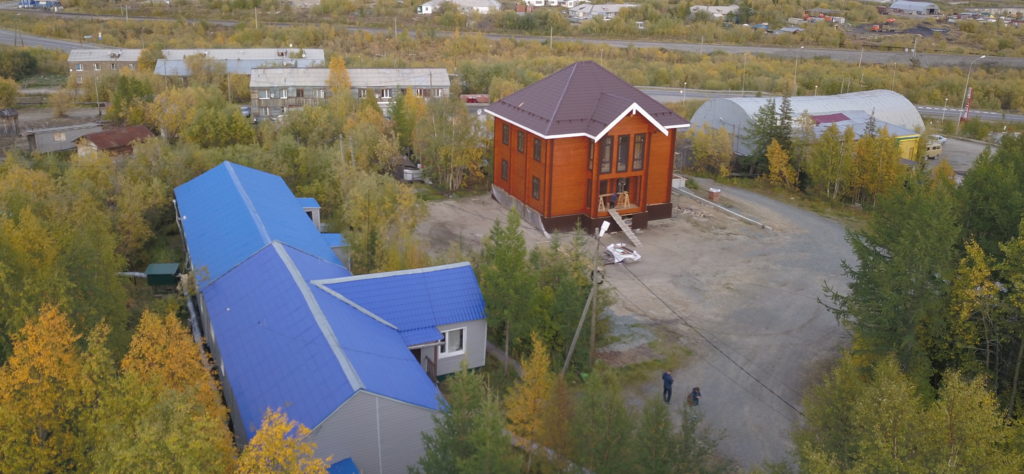
Arctic Research Station of the Institute of Plant and Animal Ecology of the Ural Branch, Russian Academy of Sciences in Labytnangi, Yamal-Nenets Autonomous District (Photo: Alexander Sokolov). 

The meeting was organized by Sasha Sokolov, Natalya Sokolova, Svetlana Sokovnina, Eeva Soininen, Dorothee Ehrich, Nicolas Lecomte and Isabel C Barrio.

We are very grateful for the support received from IASC towards travel costs of early career scientists and from the Government of Yamal, also for a very warm welcome to the town of Labytnangi.

Archived documents: you can find the meeting agenda and the extended meeting report here. You can also find earlier documents: the invitation to the meeting and the preliminary plan for the meeting.

Support for this meeting was received from the International Arctic Science Committee (IASC) and the Government of Yamal.

HN side meeting and sessions at ABC Rovaniemi 2018

As part of the Arctic Biodiversity Congress in Rovaniemi, we had a Herbivory Network side meeting. 22 participants attended the meeting, which covered general updates and discussed some new ideas, like organizing the next HN meeting in Yamal. The side meeting included a workshop on using revisitation sites to study the combined effect of vertebrate herbivory and climate change on tundra vegetation, organized by Fran Jaroszynska (University of Bergen) and Katariina Vuorinen (NTNU).

As well, HN hosted a session during the congress, titled Herbivory in the Arctic – understanding large-scale patterns and processes of a key ecological interaction. The session included presentations by Isabel C Barrio (Agricultural University of Iceland), Eeva Soininen (UiT – The ArcticUniversity of Norway), Virve Ravolainen (Norwegian Polar Institute), Elin Lindén (Umeå University) and Katarina Inga (UiT – The Arctic Universityof Norway).

Bruce Forbes chaired a session titled Large herbivores as agents of ecosystem based management in the circumpolar Arctic, which included talks by Tim Horstkotte (Umeå University), Howard Epstein (University of Virginia), Shirow Tatsuzawa (Hokkaido University/North-Eastern Federal University), Maria Väisänen (University of Oulu) and Virve Ravolainen (Norwegian Polar Institute).

Thank you all for great talks!

CSEE 2018 in Guelph

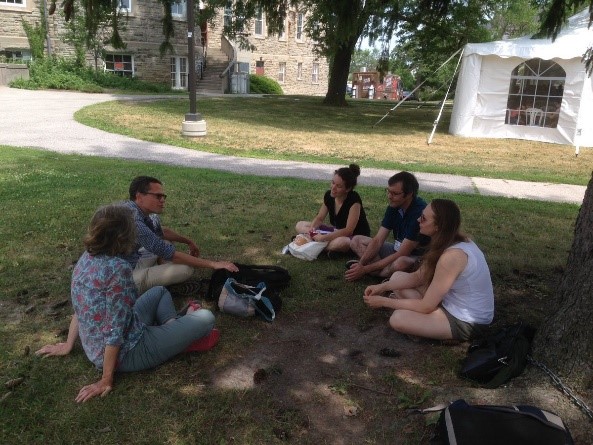
This year’s very successful annual meeting of the Canadian Society for Ecology and Evolution (CSEE) was organized in Guelph (18-21 July 2018) by HN member AndrewMacDougall, and included a symposium titled ‘Trophic interactions in the changing North’ chaired by James Speed and Jean-Pierre Tremblay. The symposium addressed how changing abiotic conditions and shifting species distributions alter trophic interactions and ecosystem dynamics in the North, and it included presentations by Isabel Barrio (Agricultural University of Iceland), Carissa Brown (MUN), Anne Loison (Université Savoie Mont Blanc, Chambéry France), Rolf Peterson (Michigan Tech), James Speed (NTNU), Jean-Pierre Tremblay (Université Laval) and Katariina Vuorinen (NTNU). We also had a lovely HN lunch get-together, discussing some science while enjoying the sun!

The abstract of the symposium:

Northern ecosystems are experiencing great change. Climatic warming alters the intensity of abiotic limitation factors, while the northward migration of species changes biotic interactions. Together these changes affect the balance of top-down and bottom-up regulating forces in boreal and Arctic ecosystems. This symposium addresses how changing abiotic conditions and shifting species distributions alter trophic interactions and ecosystem dynamics in the north. Community ecology, network ecology and biogeographical approaches to studying trophic interactions will be united and talks will cover trophic levels from producers,to herbivores and carnivores as well as soil ecology. The symposium will therefore provide a holistic venue for synthesizing understanding the regulation of northern ecosystem dynamics and communities in a period of intense environmental change.

Consequences of grazer‐induced vegetation transitions on ecosystem carbon storage in the tundra

In this paper published in Functional Ecology, Henni Ylänne and collaborators investigate the impact of reindeer on the carbon storage at two sub-arctic tundra sites in Northern Norway. The sites represent typical examples of herbivory-induced alternative ecosystem states, where high grazing pressure has led to a conversion of tundra shrublands or heaths to tundra meadows with higher rates of nutrient turnover. This study makes use of two 60-year-old reindeer fences that separate these alternative ecosystem states, and compares recent changes in above- and belowground carbon storage.

The paper reports that in the past 14 years, the increased reindeer numbers and higher trampling intensity have led to a larger areal extent of grass-dominated vegetation, leading also to higher soil nutrient availability. This demonstrates the capacity of tundra systems to adjust to changes in grazing pressure.

Further, the paper shows that the “grassification” of tundra shrublands, whether occurred recently or decades earlier, reduces carbon stored aboveground. However, the impacts of grazing belowground varied between the two study sites. At one site, the grass dominated, grazed area stored equal amounts of carbon compared to the tundra heath. At the other site, there was more carbon in the organic soil under the grass-dominated, grazed area compared to the shrub tundra. The consequences of grazing depend on the characteristics of the vegetation under light grazing.

Reference: Ylänne, H., Olofsson, J., Oksanen, L., Stark, S. (2018) Consequences of grazer‐induced vegetation transitions on ecosystem carbon storage in the tundra. Functional Ecology 32: 1091– 1102.

https://doi.org/10.1111/1365-2435.13029


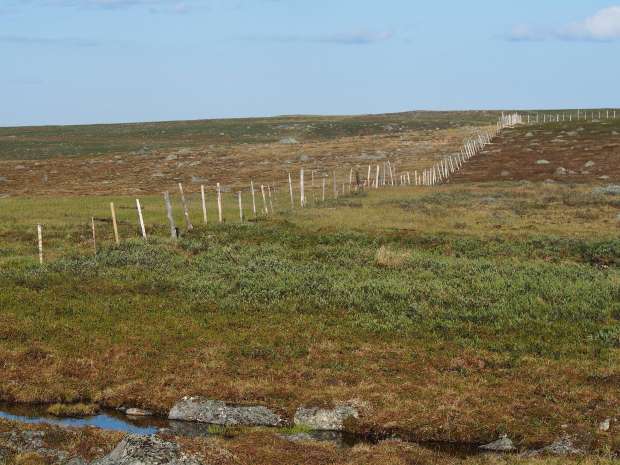
Picture: Differences in vegetation across the reindeer fence in
Čearro (photo: Henni Ylänne, Lund University, 2018)

Cervid exclusion alters boreal forest properties with little cascading impacts on soils

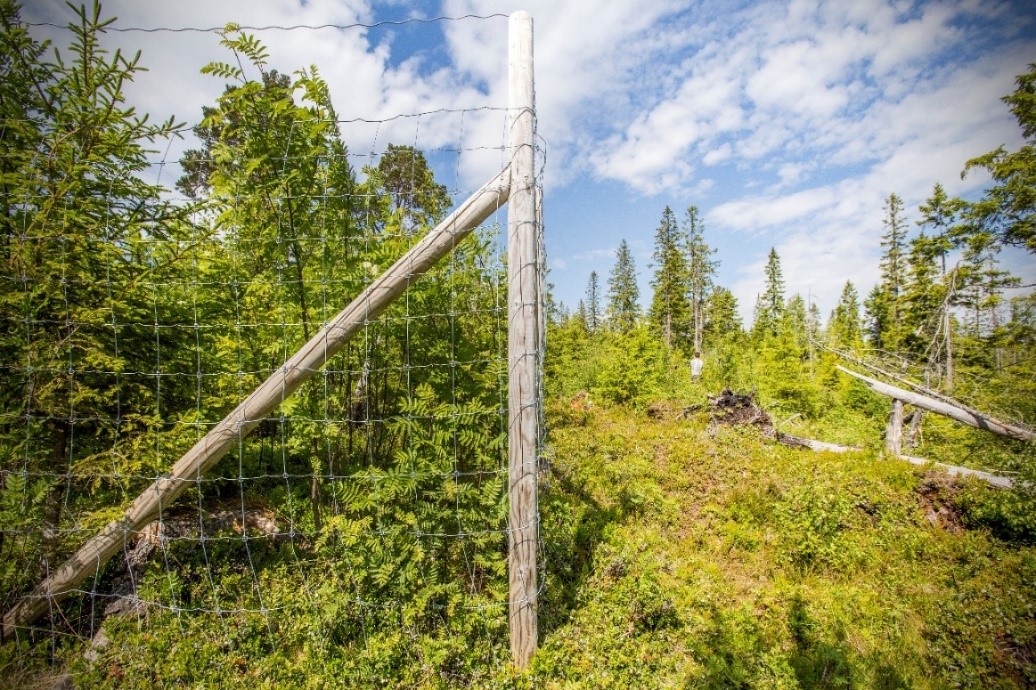
fence in boreal forest

This paper sheds new light on how moose affects forests. In a recently published article in the journal Ecosystems, Kolstad et al. showed the impact moose browsing has on boreal forest structure, tree species composition, and soil temperature and processes. Understanding the effect moose have on forest ecosystems is crucial for guiding how we manage their populations, as moose have no natural predators in most of Scandinavia. The article showed that chronic moose browsing has caused developing forest to become more open and considerably warmer. The researchers did not find any change in belowground parameters such as soil nutrient dynamics, in contrast to previous studies which showed that the conifer dominated forest associated with larger moose presence also comes with a reduction in soil fertility. This discrepancy may be a product of soils generally taking a long time to change in response to pressures, which makes way for exciting research in the future. We hope the large experimental infrastructure underpinning this study can continue for many more years so that we can increase our understanding of the functional role that moose has in the forest.

Reference: Kolstad, A.L., Austrheim, G., Solberg, E.J., Venete, A.M.A., Woodin, S.J., Speed, J.D.M. (2018) Cervid exclusion alters boreal forest properties with little cascading impacts on soils. Ecosystems 21(5):1027-1041


Picture: Moose exclosure 8 years after it was built on a recent boreal forest clear cut site in Trondheim, central Norway (Photo: Audun Hageskal)

Multiple feedbacks contribute to a centennial legacy of reindeer on tundra vegetation

The article explores long-term stability of reindeer-induced vegetation shifts by addressing “Historical Milking Grounds” (HMGs): patches in the Scandinavian tundra that were subject to high reindeer concentrations until 100 years ago,but still show a striking similarity to actively grazed areas. Next to providing a detailed description in terms of vegetation, soil and reinvasion rate of the surrounding tundra, the study reveals that several ecological drivers, such as increased nutrient turnover rates and a preference of rodents to feed on shrubs inside the HMGs, contribute to the stability of this vegetation type.

You can access the full publication here. This paper is the first chapter of Dagmar’s PhD thesis to be published. She defended her PhD thesis, called ‘Long-Lasting Ecological Legacies of Reindeer on Tundra Vegetation’ recently. Please find here a link to the PhD thesis, or email Dagmar if you are interested in the full PDF or a paper copy.

Reference: Egelkraut, D., Aronsson, K.-A., Allard, A., Åkerholm, M., Stark, S., Olofsson, J. (2018) Multiple Feedbacks Contribute to a Centennial Legacy of Reindeer on Tundra Vegetation. Ecosystems 21: 1545–1563