Quantifying muskox plant biomass removal and spatial relocation of nitrogen in a high arctic tundra ecosystem

The muskox (Ovibos moschatus), a key species in the arctic tundra, is the only large-bodied herbivore in Northeast Greenland. At Zackenberg, muskoxen can be found in some of the highest densities in the world. Consequently, a significant grazing pressure of muskoxen is expected there.

In addition, the impact on the nutrient budgets may be even larger, as herbivores tend to feed on plant parts that are rich in nutrients, and they may also redistribute nitrogen and other nutrients through defecation and urina­tion across the landscape.

This study quantify the biomass removal and nitrogen relocation by muskoxen during the snow-free period in the years 1996 to 2013 in the high arctic tundra ecosystem at Zackenberg, Northeast Greenland. By doing this, we aim at not only quantifying the muskox as a key herbivore, but also its role as redis­tributor of nutrients.

Muskoxen removed almost negligible amounts of the available forage, with under 1% during the summer. However, the muskoxen redistributed large amounts of nitrogen between vegetation types. Muskoxen at Zackenberg forage mainly in the graminoid-dominated areas, but defecate primarily in Salix snowbeds, resulting in net nitrogen transfers from the nitrogen-rich wet habitats to the nitrogen-poor, drier habitats in the same magnitude as the dissolved inorganic nitrogen pool in similar arctic soils. Hence, while the quantitative impact of muskox biomass removal seems negligible, its role as a nitrogen carrier in a nitrogen limited ecosystem is likely to have a significant impact on tundra communities. The results thus stress the central role of muskoxen in the tundra ecosystem.

Reference: Mosbacher JB, Kristensen DK, Michelsen A, Stelvig M, Schmidt NM.  (2016) Quantifying muskox plant biomass removal and spatial relocation of nitrogen in a high arctic tundra ecosystem. Arctic, Antarctic, and Alpine Research 48:229-240

Link to publication


Picture: Muskox grazing (photo: Jesper Mosbacher)

HN workshop – ITEX 2015

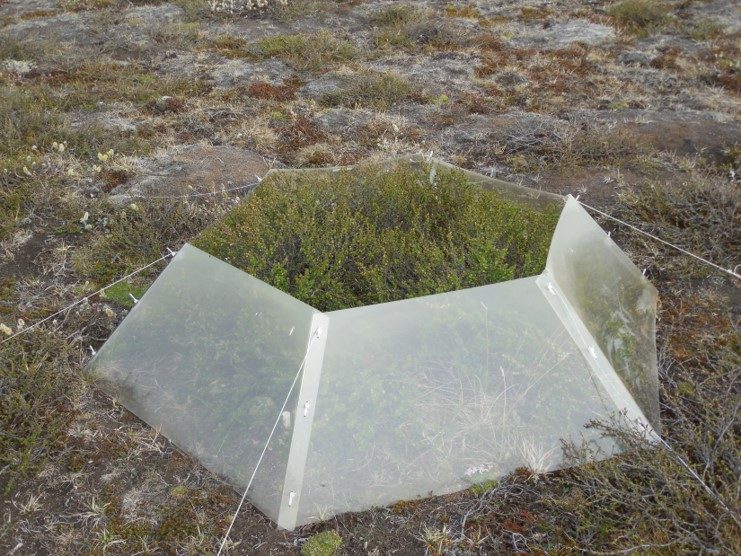
Open Top chamber from the ITEX site in Auðkúluheiði

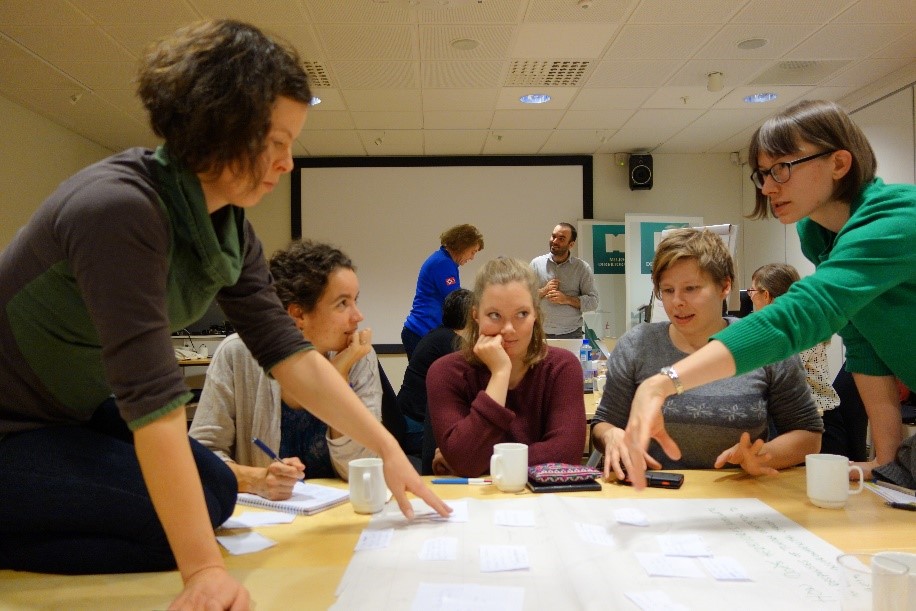
We organised a workshop on herbivory during the 21st ITEX meeting in Uppsala. The aim of the workshop was to discuss the impacts of herbivory, both by vertebrate and invertebrate herbivores, within experimental warming manipulations. Discussions were guided by an outline that was made available to participants before the workshop. As a result of the workshop we are now working on a draft on current knowledge and future challenges in understanding the role of herbivory in modulating the responses of tundra plants to warming, with a special focus on integrating herbivores into warming experiments. The workshop was organized by Johan Olofsson, Isabel C Barrio and Ingibjörg Svala Jónsdóttir.

Workshop agenda – Friday Sept 18, 2015 (10:00 – 12:20)

10:00 Herbivory in the Arctic, the past, the present and the future? Johan Olofsson
10:20 Herbivory in ITEX: standardized protocols and progress since last ITEX meeting. Isabel C Barrio
10:25 Presentation of the workshop: plan and expected outcomes
10:30 Coffee break
10:40 Discussion groups
12:00 Wrap-up and conclusions
12:20 Reporting to participants in other workshops

Arctic Biodiversity Congress 2014

ABC 2014 meeting and conference session

The Herbivory Network organized a side meeting and chaired a scientific session during the Arctic Biodiversity Congress in Trondheim, in December 2014.  The aim of these activities was to advance the development of a general, standardized protocol for measuring herbivory in tundra ecosystems in arctic and alpine environments, and to strengthen communication with the Circumpolar Biodiversity Monitoring Program (CBMP).

Side meeting

The side meeting identified the main challenges in the development of a general protocol to measure herbivory and established the next steps for achieving this goal. Overall, there was a broad agreement among the side meeting participants on the need of collaborative efforts to address herbivory questions across different sites and at different spatial scales, and thus the necessity of implementing common protocols to monitor herbivory and its impacts on tundra ecosystems.  Two main overarching research questions will guide the development of the protocol:

  • QUESTION 1. How do herbivores affect tundra vegetation? What causes temporal and spatial variation in the outcomes of plant-herbivore interactions?
  • QUESTION 2. How do herbivores modulate the responses of tundra vegetation to environmental change?

Scientific session: “How to approach collaborative research on herbivory: an ecological interaction of key importance”

The scientific session included expert talks focusing on main groups of herbivores in these systems (i.e. mammals, birds, insects), long-term ongoing monitoring efforts and comprehensive monitoring programs, and a final round table discussion.

  • The Hudson Bay Project – 20 years of collaboration to characterize the effects of goose herbivory in Hudson Bay (Ken Abraham)
  • Registering mammalian herbivory in plant communities (Kari Anne Bråthen)
  • Arctic insect herbivory: current knowledge and future directions (Toke Høye)
  • Herbivory and the Circumpolar Biodiversity Monitoring Program (Jason Taylor)

You can find the meeting report here.

HN workshop – ASSW 2014

wordcloud

Herbivory in changing northern and alpine ecosystems

The workshop ‘Herbivory in changing northern and alpine ecosystems’ was held April 9, 2014 in Helsinki, as part of the Arctic Science Summit Week 2014 and the Arctic Observing Summit. 

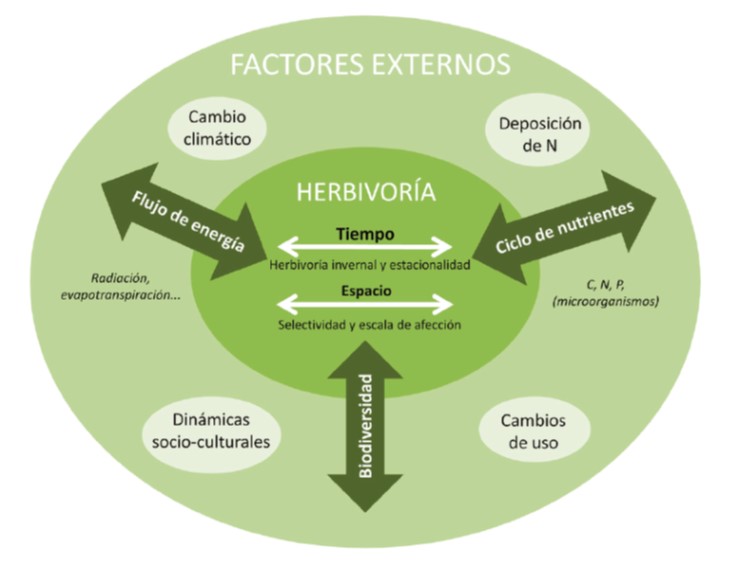
The aim of the workshop was to bring together researchers to investigate the role of herbivory in changing northern and alpine ecosystems across large spatial scales, with the goal of laying the foundation for a plant-herbivore interaction-focused research network.  32 researchers from different circum-arctic regions attended this meeting.  Overall, there was a broad agreement on the need to consolidate such a research network that, in addition to serving as a platform for communication and exchange among researchers, should be focused on developing common research interests. A fair amount of time during the workshop was devoted to defining a common conceptual model, identifying the knowledge gaps of the field and formulating an overarching research question that a collaborative effort may be able to answer. For addressing this question a common, standardized protocol is needed, based on a well-replicated, relatively simple experimental design. The first steps towards this protocol were defined during the workshop. Other points were also discussed at the meeting, including the possibility of writing a multi-authored opinion paper on the workshop outcomes, further development of a manuscript that was presented at the meeting, and the possibility of a joint funding application.

HN workshop at ASSW2014 in Helsinki
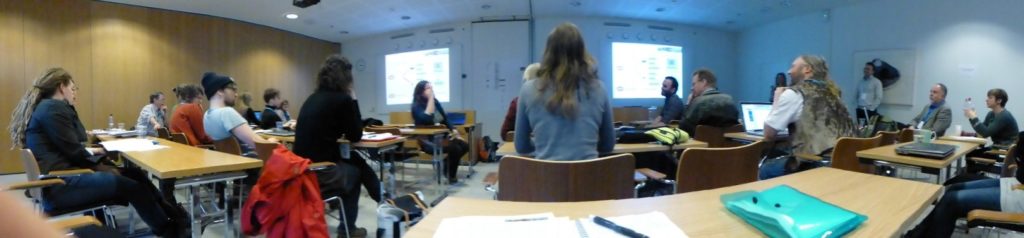
Herbivory workshop at ASSW-AOS 2014 (Photo: Maite Gartzia)

Related documents

A summary of the workshop was published in Ecosistemas, the scientific journal of the Spanish Association for Terrestrial Ecology (AEET). You can access the paper here (in Spanish).

Funding for the workshop was provided by: