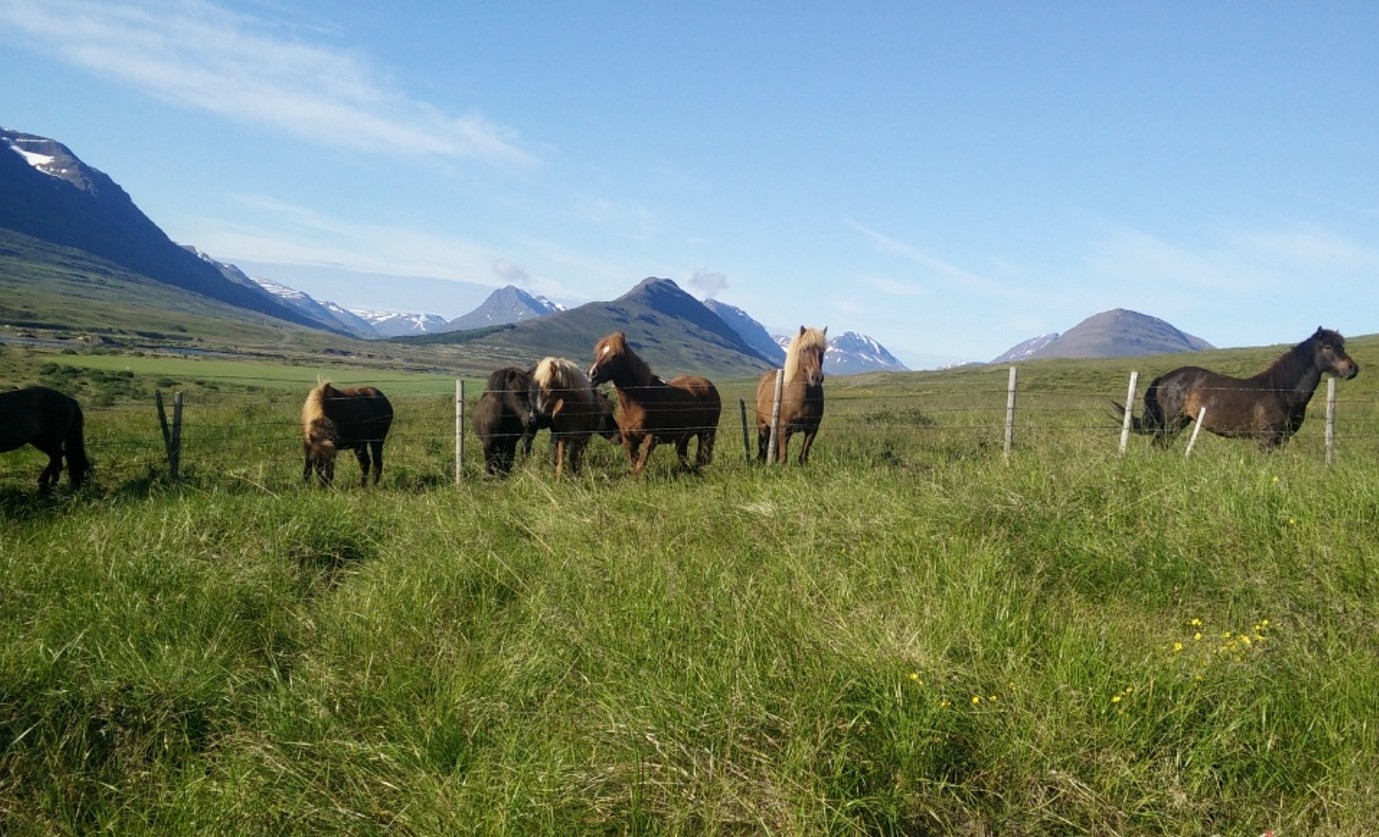
In subarctic grasslands and heathlands, traditional livestock grazing is the dominating land use since centuries. Many of these rangelands have accumulated substantial soil organic carbon (SOC) storages over this land use history, suggesting that herbivore activity has an important contribution in maintaining these ecosystems as net carbon sinks. In recent decades, however, traditional livestock grazing is increasingly abandoned, leaving many of these historically grazed rangelands unmanaged. So far, it remains poorly understood how the cessation of grazing affects the vast SOC storages if these ecosystems in the long term.
Our study aimed to better understand how sub-arctic rangelands change in the long-term, when herbivores are removed with a special focus on the soil carbon dynamics.
For this, we compiled a large network of 34 sampling sites across the Icelandic lowlands which were composed of a paired fence contrast of a grazed and long-term ungrazed grassland or heathland. The livestock exclosures in our sites were established for various reasons 20-83 years ago and maintained ever since, providing us a powerful opportunity to study the same ecosystem with and without herbivores (in our case sheep or horses) present on a multi-decadal timescale. To analyse the soil carbon dynamics, we sampled soil from all sites down to 60 cm depth together with root samples and above-ground phytomass to evaluate the impact of herbivores on the different carbon pools.
On average, ungrazed sites contained 8% less SOC in the upper 10 cm of soil, equivalent to a reduction of approximately 4 Mg ha⁻¹, compared with grazed sites. Grazing cessation also reduced fine-root carbon and nitrogen stocks in the topsoil. Overall, grazed sites accumulated about 0.15 Mg ha⁻¹ yr⁻¹ more topsoil SOC than adjacent ungrazed sites since herbivores were excluded. In several grasslands, vegetation shifted towards heathland or birch woodland following grazing cessation. The transition to birch woodland was associated with declined SOC within the rooting zone relative to the paired grazed grasslands, while the transition into heathland was strongest associated with nitrogen depletion.
Our findings suggest that sustained extensive grazing promotes SOC storage in sub-arctic grasslands by maintaining soil nitrogen availability and supporting below-ground carbon allocation through roots. In contrast, grazing abandonment can trigger vegetation changes that reduce topsoil carbon storage. Continued extensive grazing may therefore represent an effective nature-based strategy for maintaining and enhancing soil carbon stocks in sub-arctic rangelands.
Reference: Klopsch, C., Thorhallsdottir, A.G., van der Wal, R., Bardgett, R.D., Thorsteinsson, B., Geirsdottir, A., 2026. Sustained Livestock Grazing Enhances Soil Organic Carbon Storage in Sub-Arctic Grassland. Global Change Biology Communications 1, e70049. https://doi.org/10.1002/gcb4.70049
Text and picture: Christian Klopsch, 2026.