Site‐dependent interactive effects of grazing and climate change on Asian montane rangelands

Asian montane rangelands are a part of the largest contiguous grassland system in the world, and support the region’s primarily livestock based economies and lifestyles. Despite this and the fact that they are facing some of the most rapid changes in climatic conditions, they are still relatively understudied. To fill this gap, we setup a grazing x climate change (warming, drought and increased rainfall) experiment at two montane rangeland sites in Spiti valley, India and Tost in the Gobi-Altai mountains of Mongolia.


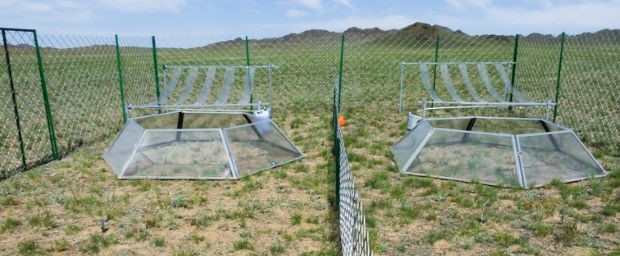
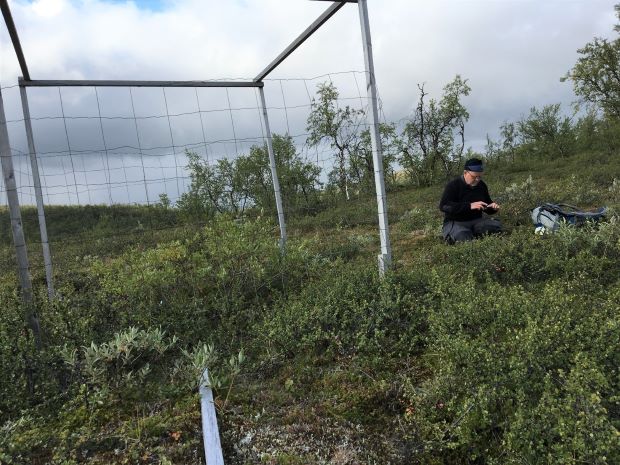
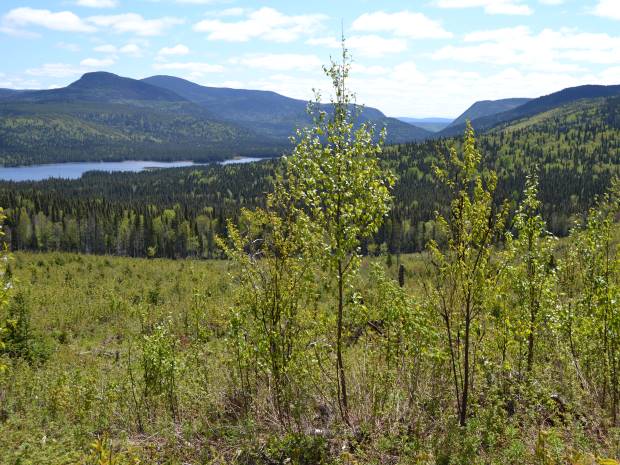
The climate warming experiment included manipulations of rain, air temperature and grazing (photo credit: M. Kohli, University of Minnesota)

We found that climate and clipping interactively reduced vegetation cover and biomass but did not affect species richness. Treatment effects and their interactions varied between sites. In ungrazed plots, vegetation cover and biomass declined sharply in response to warming (18%–35%) and drought (20%–50%) at the two sites, and, surprisingly also declined slightly in response to increased rainfall (20%) at Tost. While the effects of climate treatments were largely similar in the grazed and ungrazed plots in Tost, they were larger in the ungrazed plots in Spiti.

Taken together our findings show that future changes in climate, including just over 1°C of warming, could undermine the sustainability of pastoral economies and the persistence of wildlife across Asian montane rangelands. Furthermore, grazing by herbivores will play an important role in mediating rangeland responses to climate change; thus, pasture management in concert with local pastoralists will be crucial in mitigating the adverse effects of climate change on rangelands, pastoral livelihoods and wildlife populations.

You can read the full article here.

Reference: Kohli, M., Mijiddorj, T.N., Suryawanshi, K.R., Mishra, C., Boldgiv, B. and Sankaran, M., 2020. Grazing and climate change have site‐dependent interactive effects on vegetation in Asian montane rangelands. Journal of Applied Ecology.


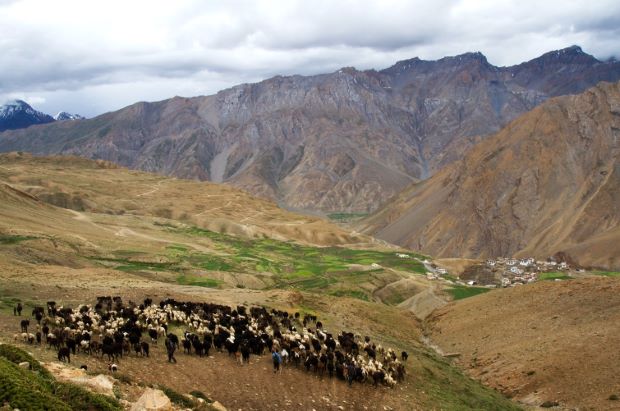
Picture: Montane rangelands provide livelihoods to pastoralists (photo credit: M. Kohli, University of Minnesota)

Reindeer use of low Arctic tundra correlates with landscape structure

Climate change in Arctic regions is linked to an expansion of woody-taxa (shrubification) and an increase in biomass as tundra becomes greener. Herbivores like reindeer and caribou are often considered able to suppress this vegetative greening through trampling and grazing. Many studies have quantified the effect of herbivory on woody taxa in local experimental sites, but there are still few studies quantifying reindeer use at the landscape scale that can shed light on their potential to suppress Arctic vegetative greening.

This study has measured reindeer habitat use within the low Arctic tundra zone of Yamal, West Siberia using reindeer faecal pellet-group counts. Active layer thickness was also measured and related to the reindeer use, as intense use of for example denuded land also could favour deeper thawing of the permafrost. These measures can help us to understand herbivore impact on the growth and recruitment of deciduous shrubs, many of which serve as fodder (e.g. Salix spp.), in favourable habitats, such as naturally denuded landslides in permafrost areas.

The results confirm intensive use by reindeer of areas with higher productivity, low erect shrub tundra and upper slopes, ridges and valleys, while the use of tall Salix areas was less intense. This suggest that reindeer are unlikely to suppress growth of already tall-erect woody taxa, while they may suppress shrubs low in stature. The study did not find any direct relationship between permafrost thawing and reindeer use, but intensively used sites seemed to have a shallower active layer. The study concludes that reindeer use of the landscape and hence their effects on the landscape correlates with the landscape structure and that future research is needed to evaluate the role and efficiency of reindeer as ecosystem engineers capable of mediating the effects of climate change.

Reference: Skarin, A., Verdonen, M., Kumpula, T., Macias-Fauria, M., Alam, M., Kerby, J.T. and Forbes, B.C., 2020. Reindeer use of low Arctic tundra correlates with landscape structure. Environmental Research Letters.
https://doi.org/10.1088/1748-9326/abbf15

You can find the full paper here, and learn more about the study in the beautiful video summary below:


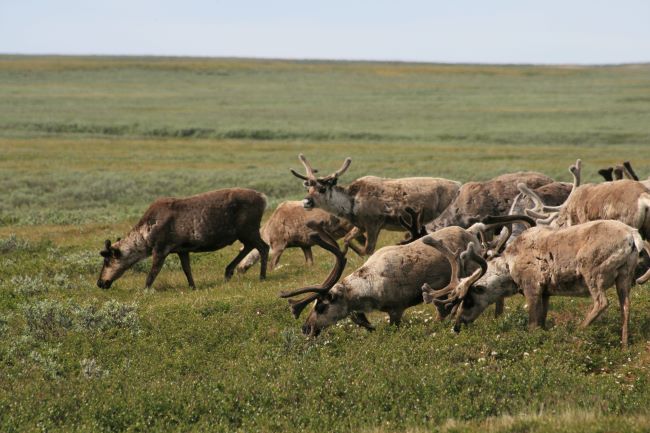
Picture: Reindeer in Yamal, Western Siberia (photo © Hannes Skarin).

Novel predictions of complex climate, insect and vertebrate herbivory effects on shrub growth in the Arctic

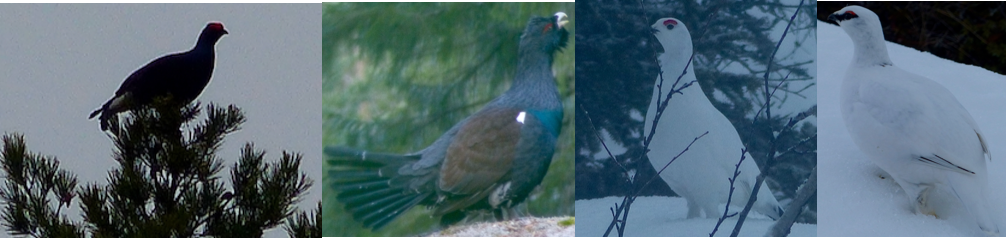
The original ideas and stimulus for the study came up from observations of heavy ptarmigan browsing on tundra willows at several arctic sites (H. Roininen and R. Virtanen during the Swedish-Russian tundra expedition to arctic Eurasia in the mid 1990s). These observations were at odds with the dominant idea that primarily abiotic stresses constrained tundra willow abundance and growth. We found it necessary to establish ptarmigan exclusion experiments to measure the browser impacts on tundra willows.

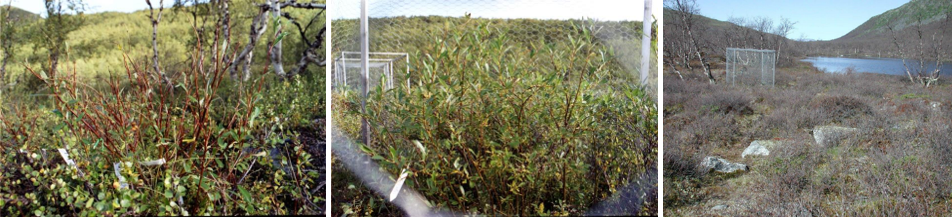
Rejuvenated willows (Salix phylicifolia) browsed by reindeer with considerable foliar loss (left), nearby plants inside the fence (middle), and an overview of the study area during after a peak phase of an Epirrita outbreak (July 2004), when most deciduous shrubs and trees (Betula, Salix) were defoliated (right). Photographs: Risto Virtanen.

We thus established experiments at a tundra landscape in NW Finnish Lapland close to Kilpisjärvi Biological Station. By setting up some pilot experiments, we soon realized that reindeer summer browsing was pretty strong on willows, and this had to be considered too. Because many willow genets in that area had stunted growth-form due to browsing, we thought it would be of interest to rejuvenate willows by initially cutting a subset of experimental genets, and let them develop vigorously growing ramets without or with browsing. The eventual experimental design thus included small mesh cages excluding ptarmigan and reindeer and large mesh allowing ptarmigan browsing but excluding reindeer, and these treatments for both rejuvenated and old genets. Indeed, our initial interest and experimental design was set up to find out how ptarmigan and reindeer effects on willow growth and survival of willows and insect herbivores.

In the first years of the experiment, reindeer effects on willow shrubs were pretty strong and have been published earlier (den Herder et al. 2004 [1]). Because of rather slow growth of willows (just c. 2-3 cm /year) the intention was to continue monitoring over several years. In that region, autumnal moth outbreaks had not been seen for decades and we did not expect them to happen. However, a couple of years after the  initiation of the experiment things changed: the first autumnal moth (Epirrita autumnata) outbreak took place in 2004-2005 (as most intense) which caused virtually complete defoliations of willow (and nearby mountain birch forests), and obviously negative effects on growth. The second outbreak came in 2011-2013 (a bit less severe than the first) with nearly as strong effects on willow as during the first outbreak. Some background insect herbivory occurred every year, and there were marked among-year variations in key climate variables thought to impact willow growth. We thought that the long-term experimental monitoring data would allow us to look at how insect herbivory, summer thermal and precipitation conditions influence annual shoot growth and even how these depend on browsing pressure.

The analyses of relations between annual shoot growth increments, climatic and biotic drivers turned out to be challenging, and we found empirical dynamic modelling (EDM) to be the most powerful approach for the purpose. The EDM analyses on the 20-year time series showed that negative effects of insect herbivory on shoot growth became stronger in warmer summers, whereas precipitation effects tended to become less negative effects with increasing precipitation, and this latter effect seems to moderate warming effect. These effects further depended on browsing pressure and ramet age.

The results establish that local growth dynamics of willows at a forest tundra ecotone is impacted by multiple herbivores that moderate growth responses to climate. The research continues to look the long-term cumulative impacts of treatments, and also the effects of changes in reindeer management, on the survival and growth of willows.

You can find the full text here.

Reference: Virtanen, R., Clark, A.T., den Herder, M., Roininen, H. (2020) Dynamic effects of insect herbivory and climate on tundra shrub growth: roles of browsing and ramet age. Journal of Ecology 109(3):1250-1262
https://doi.org/10.1111/1365-2745.13551

[1] den Herder, M., Virtanen, R., & Roininen, H. (2004). Effects of reindeer browsing on tundra willow and its associated insect herbivores. Journal of Applied Ecology, 41(5), 870-879. [link to publisher]


Text by Risto Virtanen, University of Oulu

Picture: An experimental exclosure with reindeer fence and a willow genet (Salix phylicifolia) inside the fence (taken in 2019 N of Lake Haukijärvi, tundra like habitat with other species Betula nana, Salix glauca, and close to Betula pubescens ssp. pumila treeline) (photo: Risto Virtanen, University of Oulu, 2020)

Postdoc and PhD positions at the University of Oulu

University of Oulu

A new 4-year project, Interacting Processes in Arctic Reindeer Systems Experiencing Rapid Climate Change, at the Kvantum Institute of the University of Oulu is recruiting a postdoctoral fellow and a PhD student addressing reindeer systems in Finland.

  • The Postdoctoral Researcher will study Social-Ecological-Climate Interactions, between reindeer herders, Lapland landscapes, weather & climate. The successful candidate will conduct and use stakeholder workshops and interviews to integrate traditional knowledge with scientific discoveries to co-produce new insights and identify key vulnerabilities, adaptive strategies, and management options applicable to sustainable reindeer systems.
  • The Doctoral Student will quantify CO2 feedback magnitudes and year-long patterns in response to long term differences in reindeer grazing history and changes in winter snow regimes. These studies will be undertaken in Lapland at the Kevo Field Station and at the Oulanka Field Station in eastern Finland and will contribute to the EU EcoClimate research community.

Application deadline is November 1, 2020. More information can be found here and in the online application system. For further questions, please contact Jeff Welker.

Postdoctoral position in Global Change and Biotic Interactions Ecology in Finland

University of Oulu

Anu Eskelinen is seeking a highly motivated and independent postdoctoral researcher to strengthen our team in the study of questions related to climate warming, nutrient enrichment, herbivory, traits, dispersal limitation, lowland species invasions to open tundra, and how these interact to affect diversity and productivity in herbaceous plant communities in grasslands and tundra. The research will be partly based on global experimental Nutrient Network), and the postdoc will lead an add-on study conducted at multiple Nutrient Network sites worldwide, and synthesize existing data. The work will be done in close collaboration with a large international researcher team and includes collaboration with Physiological Diversity Department, German Centre for Integrative Biodiversity Research (iDiv), and Helmholtz Centre for Environmental Research UFZ, Leipzig, Germany, and there will be research visits to Leipzig.

The position is funded for two years and will be based at the University of Oulu, in Finland, and is expected to start Jan 1, 2021. Deadline for applications is November 15, 2020.

You can find more details about the position here. If you have any questions, please contact Anu Eskelinen by email.

You can also find the link to the job announcement online application system here: https://rekry.saima.fi/certiahome/open_job_view.html?did=5600&lang=en&id=00009888&jc=1

MS Assistantship available – Microbial ecology and carbon cycling of coastal Alaskan wetlands

An NSF-funded MS assistantship at Utah State University is available starting in January or May of 2021 to work in the Beard Lab and closely with the Atwood Lab and the Waring Lab. We seek an enthusiastic and inquisitive student who is interested in understanding the role of herbivory, climate change, and wetland ecology and management in affecting microbial communities and carbon sequestration and greenhouse gas (carbon dioxide and methane) exchange in wetlands of the Yukon-Kuskokwim Delta. The project will focus on waterfowl impacts on vegetation and implications of atmospheric exchange. This study does not focus on waterfowl themselves but instead on the ecosystem services of coastal wetlands in Alaska.  

Utah State University is a highly selective, public, land-grant university and is classified as a Carnegie R1 Research University. The main campus is located in Logan, a community of 100,000 people.. For more information on Logan see http://www.tourcachevalley.com. The Beard Lab is committed to supporting and advancing diversity in STEM. Applications from members of historically underrepresented groups are strongly encouraged.  

Required Qualifications: An undergraduate degree in ecology, soil microbiology, biological sciences, biogeochemistry or other closely related environmental science field with quantitative abilities and self-motivation. Required skills: Fieldwork experience in ecology. Preferred experience: Experience with R, DNA analysis, laboratory experience, and experience with LiCORs or other greenhouse gas analyzers. The successful applicant will spend two summers in a remote research camp on coastal western Alaska. Applicants should have experience or interest in learning how to drive boats and snowmobiles, and live in remote field sites for extended periods of time is needed. In your cover letter, please describe your experience or willingness to gain these experiences, and to live in a remote area.  

Review of applications will begin on October 10, 2020 and continue until the position is filled. The appointment will begin between January 1, 2021 and May 10, 2021, with an initial commitment of two years of funding. A competitive stipend (~$18,000) and full tuition package will be offered.  

In your application, please include:  

  1. A cover letter that explains how your research and experience aligns with the skills and research activities listed above
  2. A CV or resume, including your GPA and relevant experience (GRE scores are optional) 
  3. A list of three professional references and their contact information.  

Please send your application and any questions to Karen Beard: karen.beard@usu.edu 

Mountain hares follow the green-up wave in the pursuit of high-quality food

Diet composition in herbivores differs greatly from season to season because they eat many types of grasses, shrubs, and forbs. This flexibility allows arctic-alpine species like mountain hares (Lepus timidus) to cope with changing environmental conditions over the seasons and the corresponding changes in food quantity and quality. Understanding how, when, and why animals use certain areas is critical to their conservation and management.  

Mountain hare at a resting site in summer (Photo: © Rolf Giger)

Rehnus and Bollmann investigated the distribution of pellets and of individual core activity areas of mountain hares in the Swiss Alps and compared differences between spring and autumn. Pellets were collected from 2014 to 2019; individuals were determined using an established, non-invasive genetic technique.

Their study presents details about altitudinal shifts in the feeding sites and activity areas of mountain hares in the Alps. They conclude that the annual “wave” of greening from lower to higher elevations, which correlates with forage availability and quality, explains this shift. However, further research is needed on how these shifts are affected by climate change and how they interact with nutritional needs and thermoregulatory mechanisms.

Reference: Rehnus, M., Bollmann, K. (2020) Mountain hares Lepus timidus follow the green-up wave in the pursuit of high-quality food. Wildlife Biology, 2020, 3: 00720. doi: 10.2981/wlb.00720

You can find the full paper here.


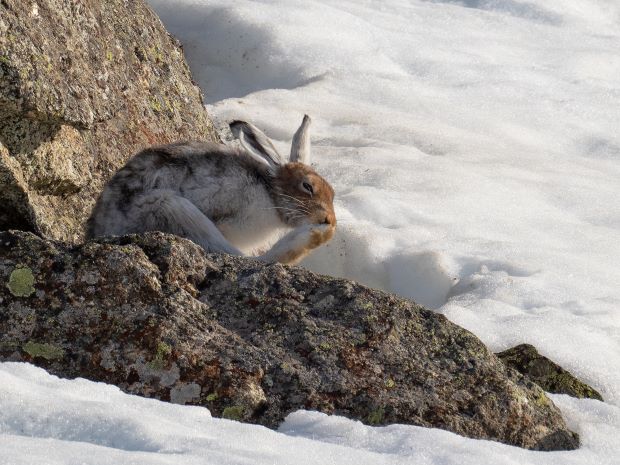
Picture: Mountain hare during grooming in early-summer (photo © Rolf Giger).

Cool as a moose: How can browsing counteract climate warming effects across boreal forest ecosystems?

Herbivory can modify vegetation responses to climatic changes, but climate and herbivory also affect each other and rarely work in isolation from other ecological factors. Thus, it is challenging to predict how herbivory counteracts, amplifies and interacts with climate impacts. We used experimental exclosures in Norway and Canada to investigate how moose browsing can modify climatic responses of boreal trees. By modeling complex causal pathways including several climatic factors, multiple tree species, competition, tree height, time, food availability, and herbivore presence, density and browsing intensity, we found that moose can indeed counteract positive temperature responses of trees. However, this effect varied between tree species depending on moose foraging preferences. Furthermore, we found that moose can contribute positively to the growth of some trees by constraining growth of competing trees. This “cooling power” of herbivory appears to be highly context-dependent, so in order to understand its potential to prevent changes induced by warming climate, ecological complexity needs to be acknowledged.

Reference: Vuorinen, Katariina E. M., Anders L. Kolstad, Laurent De Vriendt, Gunnar Austrheim, Jean‐Pierre Tremblay, Erling J. Solberg, and James D. M. Speed (2020) Cool as a moose: How can browsing counteract climate warming effects across boreal forest ecosystems? Ecology: e03159.

You can find the full paper here.


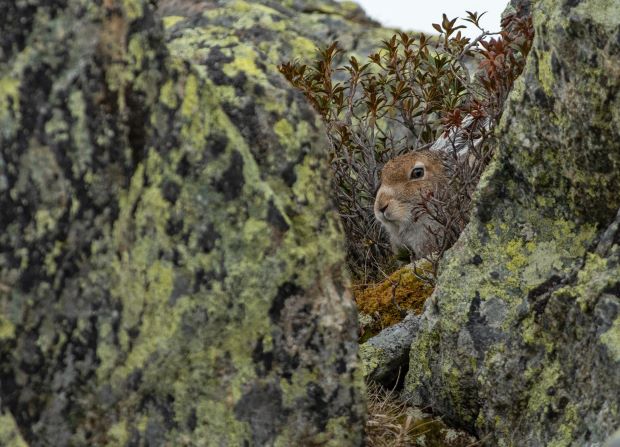
Picture: A field site in Gaspesie (Photo by Katariina E. M. Vuorinen).

Two postdoctoral positions at the Arctic Centre

The Arctic Centre, University of Lapland is seeking to fill two post-doctoral research positions that will address decadal to centennial changes in Arctic climate and biodiversity, including social-ecological feedbacks and drivers. The positions are key personnel appointments for scientific management of the project “Feedbacks and Drivers of Changes in Arctic Terrestrial Biodiversity (CHARTER)”, funded by the EU’s Horizon2020 “Changing Cryosphere” programme.

The fields of research are:
1) geography/ecology/earth system science; and
2) social anthropology/human geography

The positions are expected to start in the fall 2020 (latest Oct 1, 2020) and will be based in Rovaniemi. Deadline for applications is August 3, 2020.

You can find more details here.

Tenure track position in Environmental Sciences at the Agricultural University of Iceland

The Faculty of Environmental and Forest Sciences at the Agricultural University of Iceland (LbhÍ) is seeking applicants to fill a full-time tenure-track position as Assistant Professor in the field of environmental sciences.

We are looking for a dynamic scholar with a PhD in plant ecology, ecosystem ecology, soil ecology, environmental sciences or related fields, a strong publication record and experience in securing research funds and teaching.

Deadline for applications is August 10, 2020.

You can find more information and how to apply here and on the website of the Agricultural University of Iceland:
http://www.lbhi.is/lektor_i_umhverfisfraedum

If you are interested, please get in touch with Isabel C Barrio.