
Postdoctoral position in Tromsø within the CHARTER project

Two-year postdoctoral position at UiT The Arctic University of Norway and The Norwegian Institute for Nature Research (NINA).

We are looking for a postdoctoral fellow to join the EU-project “Drivers and Feedbacks of Changes in Arctic Terrestrial Biodiversity (CHARTER)”. The project is an ambitious effort to advance the adaptive capacity of Arctic communities to climatic and biodiversity changes through state-of-the-art synthesis based on thorough data collection, analysis and modelling of Arctic change with major socio-economic implications and feedbacks. CHARTER involves 21 research institutions across nine countries and is led by the Arctic Centre at the University of Lapland.

In CHARTER, the postdoc will primarily work with topics on Arctic biodiversity and transitions in land cover and the cryosphere related to direct and indirect impacts of major drivers of change over decadal time scales using mainly existing datasets collected on the ground and through remote sensing (mainly work packages 1 and 2 in CHARTER). Research topics will include:

  • herbivory, and relationships between different herbivores in tundra ecosystems
  • predator community composition/changes
  • climatic and environmental changes driving rapid vegetation transitions with impacts on local communities and nature-based industries

CHARTER has a strong focus on involving various stakeholders, including reindeer herders and managers, and in communicating with public authorities on multiple levels. The postdoc will be involved in communication with stakeholders and authorities.

You can find more information and the link to the application portal here.

Deadline for applications is March 3, 2021. For more information please contact Dorothee Ehrich (dorothee.ehrich@uit.no), Hans Tømmervik (hans.tommervik@nina.no) or Jarle Bjerke (jarle.bjerke@nina.no).

PhD position at the Agricultural University of Iceland

Deadline for applications: March 5, 2021

We are looking for a motivated PhD student to join the project “Herbivores in the tundra: linking diversity and function (TUNDRAsalad)” funded by the Icelandic Research Fund.

TUNDRAsalad will explore the role of herbivore diversity in tundra ecosystems, and how different assemblages of herbivores influence ecosystem functions in high latitude ecosystems. The PhD project will focus on Iceland, to understand the impacts of herbivore diversity and guide sustainable grazing management at a regional scale. Iceland represents a unique situation with no native large mammalian herbivores but extensive grazing by domestic and introduced mammals (sheep and reindeer), ptarmigan and increasing populations of migratory avian herbivores (geese and swans). Current knowledge of species abundance and distribution will be used to estimate herbivore pressure and diversity across Iceland and target field sites in the grazing commons above the alpine treeline. The PhD project will involve mapping the distribution of herbivores in Iceland and conducting fieldwork to measure ecosystem function across Iceland, as well as modelling the potential impacts of changes in herbivore assemblages in Iceland over time.

The PhD project will focus on Iceland, to understand the impacts of herbivore diversity and guide sustainable grazing management at a regional scale.

The PhD student will be based at the Reykjavík campus of the Agricultural University of Iceland, and will be co-supervised by Isabel C Barrio (Agricultural University of Iceland), James Speed (Norwegian University of Science and Technology) and Noémie Boulanger-Lapointe (University of Iceland).

The deadline for applications is March 5, 2021 and the position will start as soon as possible after April 1, 2021. The project has a duration of three years.

Applications are welcome from candidates with a MSc degree in ecology, environmental sciences or related fields. Applicants should ideally have experience in conducting fieldwork in remote areas and be able to work as part of a team and independently. Knowledge on the use of Geographic Information Systems (GIS), the statistical software R and a driving license are desirable skills.

In your application you should include:

  • Cover letter that explains how your research interests and experience align with the position
  • CV or resume, including your overall grade and relevant experience
  • List of two professional references and their contact information

Please send your application and any questions to Isabel C Barrio (isabel@lbhi.is). For more details see the ad on the website of the Agricultural University of Iceland.


If you are interested in this project, you may also be interested in another related PhD position at the University of Iceland.

Environmental change reduces body condition, but not population growth, in a high‐arctic herbivore

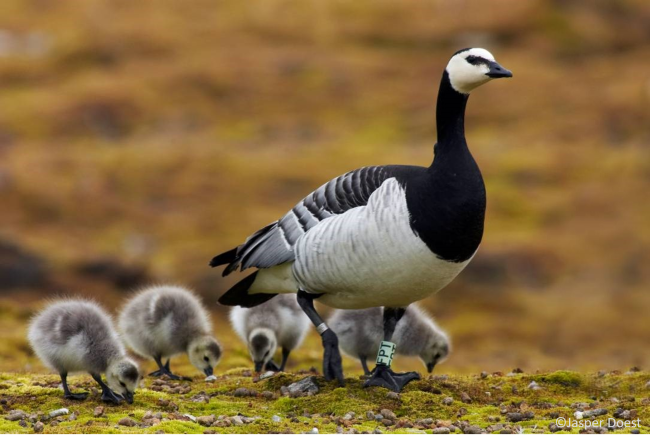
The high Arctic is changing rapidly: climate change means advancing springs, and more treacherous winters, with more frequent extreme weather events. On top of this, barnacle geese breeding in the Arctic have been on a diet. So many geese are now migrating to northern breeding grounds that in some places there’s less food to go around. The good news is that it doesn’t seem to restrict their population growth — yet.

This study of individuals’ physical condition, over almost 30 years, showed a 10% decline in average body condition. Especially for herbivores, reduced condition should lead to reduce reproduction and survival. Surprisingly, however, this decline didn’t translate into noticeable effects on population numbers. This is because it’s overridden by other important environmental effects, such as positive impacts of earlier springs and negative effects of Arctic foxes on reproduction. Nevertheless, there is obviously a limit to how skinny the geese can be, if their summer habitat continues to degrade, so it’s likely to restrict population growth at some point in the future.

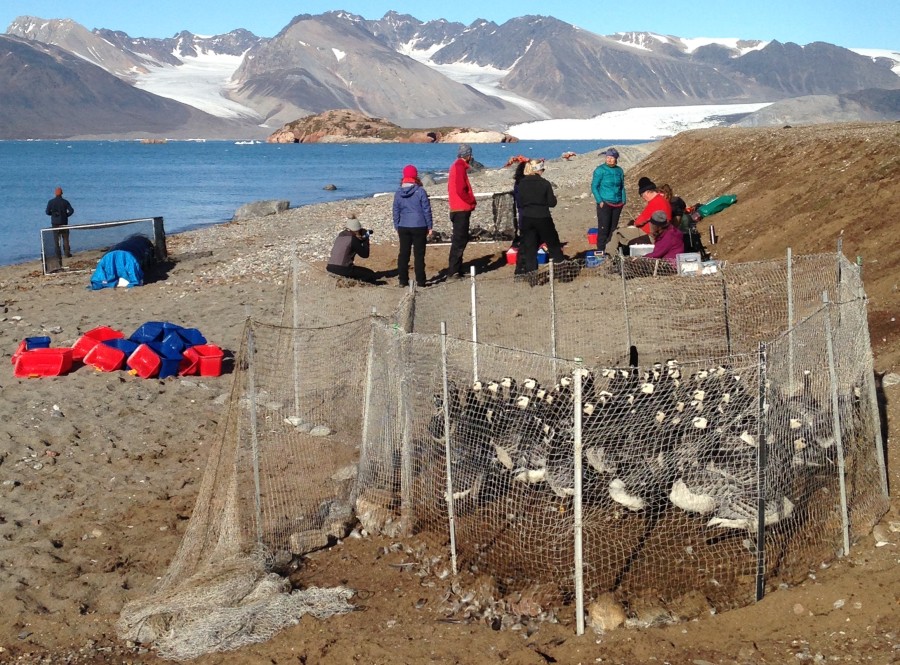
Fieldwork in Ny‐Ålesund, Svalbard where Barnacle geese were captured to measure body mass. (Photo credit: Christiane Hubner)

You can find the full paper here.

Reference: Layton‐Matthews, K., Grøtan, V., Hansen, B.B., Loonen, M.J., Fuglei, E. and Childs, D.Z., 2020. Environmental change reduces body condition, but not population growth, in a high‐arctic herbivore. Ecology Letters. doi: 10.1111/ele.13634

Link to full article write up: https://norwegianscitechnews.com/2020/12/skinnier-but-resilient-geese-thriving-in-the-high-arctic/


Text: Kate Layton-Matthews, Norwegian Institute for Nature Research

Photograph: Svalbard barnacle geese (Branta leucopsis) (photo credit Jasper Doest Photography)

Two Arctic Postdoctoral Researcher positions at the University of Eastern Finland

The project Land use as a modulator of land cover transitions and the ecosystem–atmosphere carbon balance (LANDMOD) is associated with the Digital Geosciences Research Group at the University of Eastern Finland (Joensuu campus). The aim of the project is to unravel the impacts of land use on land cover changes and their consequences for the climate. We particularly look at reindeer management strategies as the type of land-use and focus on depicting land cover differences on wetlands. Our main objectives are 1) to contribute understanding of the rates, magnitudes and mechanisms of land cover changes under different reindeer management strategies and 2) to quantify how the differences in land cover reflect on the release and uptake of CO2 in a landscape level using Eddy Covariance technology. Besides estimating the impact of land use today, we will also estimate the influence of past land use on the cumulative carbon balance. With these approaches, the project will contribute understanding on how and why the rates and magnitudes of land cover transitions vary at high-latitudes in northern Fennoscandia, and how these feedback to the atmosphere.

In the project, we open two two-year postdoctoral researcher positions: a postdoctoral researcher position in Remote Sensing and a postdoctoral researcher position in Ecosystem-Atmosphere Biogeochemistry. Both postdoctoral researchers will take part in an international research team and collaborate with Timo Kumpula (University of Eastern Finland), Henni Ylänne (University of Eastern Finland / Lund University), Natascha Kljun (Lund University), Oliver Sonnentag (Université de Montréal), Christina Biasi (University of Eastern Finland) and Narasinha Shurpali (Natural Resources Institute Finland).

Deadline for applications is February 25, 2021.

More info on the positions can be found in the attachment or on the UEF application portal:

For further information, please contact: Timo Kumpula (timo.kumpula@uef.fi) or Henni Ylänne (henni.ylanne@cec.lu.se)

Funding from UniOulu Arctic Researchers’ Network Call

Congratulations to Maria Väisänen who received funding for the project Impacts of grazers on litter decay rates across northern hemisphere revealed using peer-sourced research network and standardized protocols from the UniOulu Arctic Researchers’ Network Call for proposals for Early stage researchers.

The funding will allow purchasing teabags and temperature loggers to address the question: how do herbivory induced differences in vegetation cascade down to litter decay rates? Some pilot sites in Iceland, Norway and Finland with existing grazing exclosures will be used in summer 2021, with the aim of testing the field protocols and expanding the network of sites in coming years.

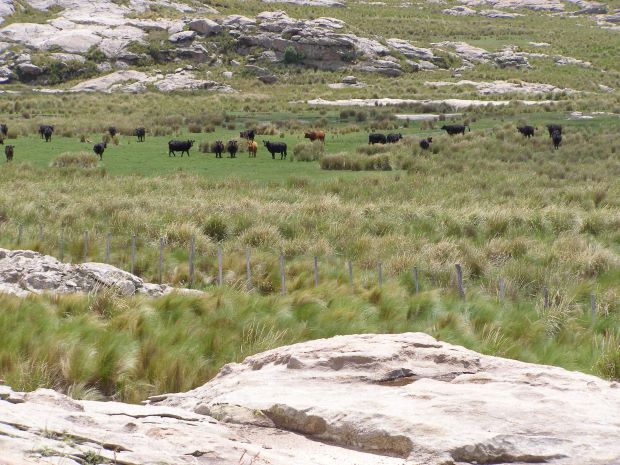
Extensive grazing reduces plant and soil C stocks in the highlands of central Argentina

In this article we describe for the first time the amount of C stored in the plant and soil compartments of extensively grazed highland grasslands of central Argentina under different grazing pressure, to understand their contribution to regional carbon storage.

We quantified C stocks of standing plant, litter, and roots biomass, and soil in three coexisting grassland types associated with different livestock use and analysed how those stocks vary across grassland types. Our main results showed that these mountain grasslands represent an important regional C reservoir, with total C stocks (plant plus soil) ranging from 110 to 472 Mg C ha−1, with more than 95% of C being stored in soils. Differences in soil C stocks up to 30 cm depth were not associated with grassland types. However, in patches associated with higher livestock use, belowground plant C increased, whereas aboveground plant C was reduced.

Our study shows that highland grasslands of central Argentina maintain huge soil C reservoirs. Livestock use could reduce surface C stocks by affecting the plant biomass compartments, which could have a long-term effect on soil C stocks, with direct implications for mountain grasslands management and conservation in the context of climate change mitigation.

You can find the full article here, or ask Georgina Conti for a copy 🙂

Reference: Vaieretti, M.V., Conti, G., Poca, M., Kowaljow, E., Gorné, L., Bertone, G., Cingolani, A.M. and Pérez‐Harguindeguy, N. (2021) Plant and soil carbon stocks in grassland patches maintained by extensive grazing in the highlands of central Argentina. Austral Ecology.
https://doi.org/10.1111/aec.12992


Picture: Extensive grazing in the central highlands of Argentina (photo: Georgina Conti, Consejo Nacional de Investigaciones Científicas y Técnicas, Argentina)

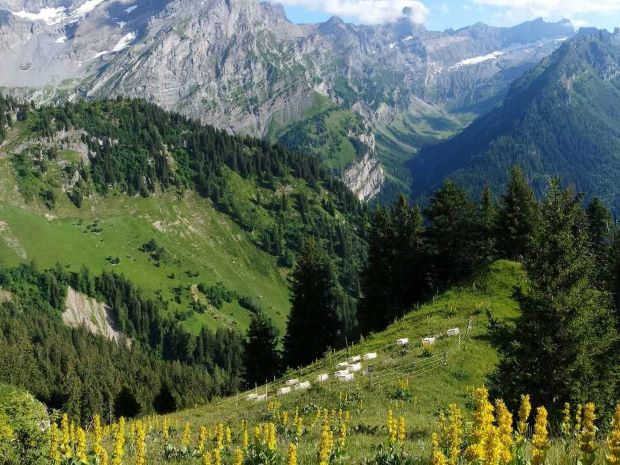
Novel trophic interactions under climate change promote alpine plant coexistence

Elevational shifts in the distribution of species can have large consequences to high-elevation ecosystem. More so, when we are talking about herbivores.

In a field experiment, Patrice Descombes and collaborators translocated various species of grasshoppers from medium elevations (1,400 m a.s.l.) to three alpine grassland sites at 1,800, 2,070 and 2,270 m a.s.l. in the Anzeindaz region in the Vaud Alps. They measured how the biomass, structure and composition of the alpine plant communities changed under the influence of the herbivorous insects. They also investigated whether some plant species were more susceptible to herbivory, for instance plants with tougher leaves, or those containing more silica or other constituents such as phenols or tannins.

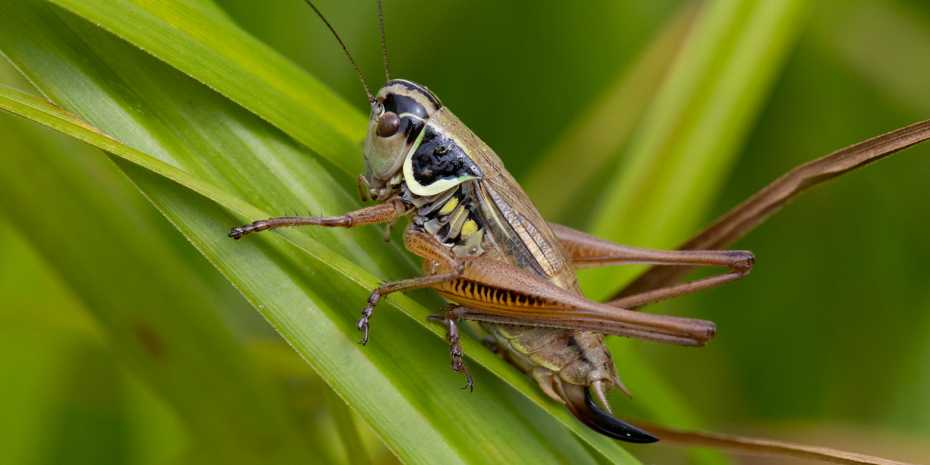
Roesel’s bush-​cricket is one of the many grasshoppers that might migrate to higher elevations once the climate in lower elevations has become unsuitable (photograph: Christian Roesti)

The grasshoppers’ feeding behaviour had a clear influence on the vegetation structure and composition of the alpine flora. Alpine communities display clear structure in the organisation of the canopy, with plants with tough leaves at the top, and more shade-​tolerant plants with softer leaves at the bottom. But this natural organisation was disturbed, because the translocated grasshoppers preferred to feed on taller and tougher alpine plants, that were more similar to their lower-​elevation food plants. As a result, the insects reduced the biomass of dominant alpine plants, favouring the growth of small-​statured plants. The overall plant diversity thus increased in the short term.

Global warming can disrupt the ecological balance of biotic communities because mobile animals, including many herbivorous insects, can expand their habitat to higher elevations more rapidly than sedentary plants. Herbivorous insects from lower altitudes could therefore have an easy time in alpine habitats with resident plants that are insufficiently prepared to defend themselves against those new herbivores. This could change the current structure and functioning of alpine plant communities as a whole. Climate change would thus have an indirect impact on ecosystems, in addition to the direct consequences of rising temperatures.

Their study has been published in Science. You can find the full article here.

Reference: Descombes, P., Pitteloud, C., Glauser, G., Defossez, E., Kergunteuil, A., Allard, P.M., Rasmann, S. and Pellissier, L. (2020) Novel trophic interactions under climate change promote alpine plant coexistence. Science370(6523):1469-1473.


Picture: Research site at 1,800 m in the Chablais region. In the background: Vallon de Nant and the Grand Muveran (photo: P. Descombes)

DISENTANGLE: Disentangling the impacts of herbivory and climate on ecological dynamics

The project led by James Speed, started in 2017 and investigated the interactive effects of herbivory and climate on northern ecosystems. The DISENTANGLE project was hosted by the NTNU University Museum, Norwegian University of Science and Technology. Partners included Isabel Barrio (Agricultural University of Iceland), Alison Hester (James Hutton Institute, Scotland), John-Arvid Grytnes (University of Bergen), Jean-Pierre Tremblay (Université Laval) and Gunnar Austrheim and Mike Martin (NTNU). 

There are three components to the project, the first used dendroecology to tease apart the effects of herbivory and climate on woody plant growth in boreal and tundra ecosystems, and long-term plant community data to investigate the herbivore and climate impacts on vegetation change. Katariina Vuorinen, a PhD student at the NTNU University Museum led this work (Vuorinen et al. 2022). The second aspect of the project investigated how herbivores affect the distribution of plant species. The third section of the project mapped out herbivore communities across the boreal and tundra biomes (Speed et al. 2021). 

Stomping in silence: Conceptualizing trampling effects on soils in polar tundra

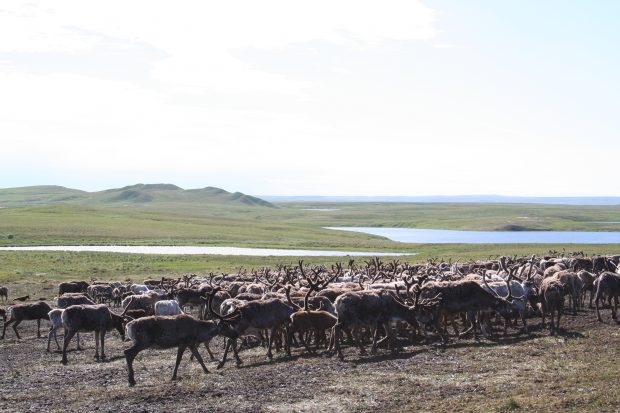
Across the world, soils are impacted by disturbances caused by trampling of large animals and us, humans, as well as by the weight of our vehicles. Polar tundra ecosystems face these same pressures, as tundra is occupied by large grazers, such as reindeer and musk ox, but also experiences ever increasing human activities. Still today, the impacts of these disturbances on tundra soils remain largely unknown.

We carried out a literature review 1) to map how trampling affects soils across ecosystems and 2) to gather empirical evidence about trampling effects on polar tundra soils.


Trampling by large animals and human activities shape polar tundra soils.

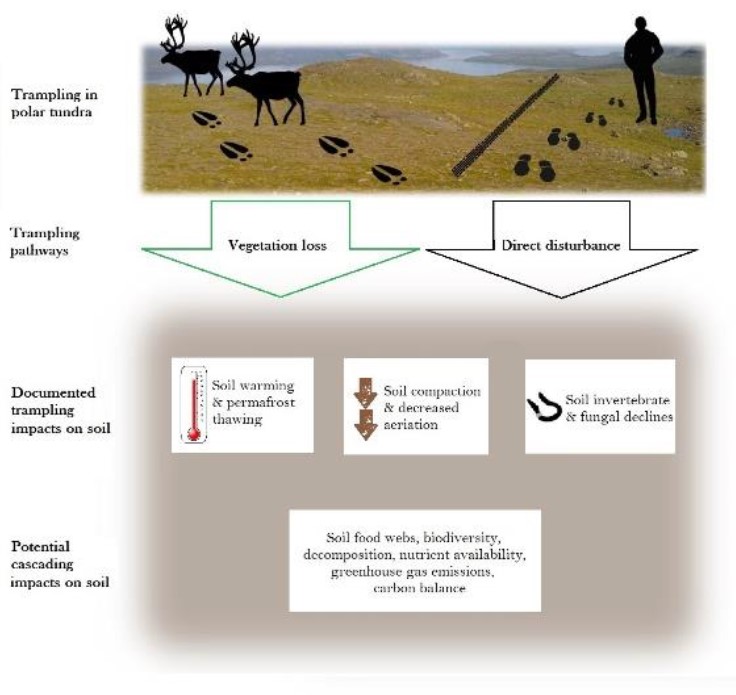
The reviewed literature revealed deteriorating effects of trampling on vegetation and, in polar tundra, trampling was particularly harmful for mosses. Since mosses play an important role in insulating tundra soils, the trampling-induced thinning and loss of the moss layer often leads to increasing soil temperatures that can further induce thawing of permafrost. Together, soil warming and permafrost thawing can, in turn, increase greenhouse gas emissions from polar tundra soils.

Our review also showed that trampling often induces soil compaction. This links with decreased soil pore space and reduced availability of oxygen and both of these changes have the potential to cascade down to soil biota. In line with this, trampling decreased the abundance of soil invertebrates and fungi, whereas bacteria were more resistant to trampling-induced changes in the soil environment.

We conclude that even though some of the trampling-induced impacts on soils are well documented and have received empirical evidence even from the polar tundra, the cascading effects and pathways leading to altered ecosystem services, such as soil biodiversity, nutrient availability and carbon balance, remain largely undocumented. The tundra-specific patterns reported in the paper highlight the urgent need for more empirical work to support informed efforts to manage and predict the functioning of polar tundra under global changes.

You can find the full article here.

Reference: Tuomi, M., Väisänen, M., Ylänne, H., Brearley, F.Q., Barrio, I.C., Bråthen, K.A., Eischeid, I., Forbes, B.C., Jónsdóttir, I.S., Kolstad, A.L., Macek, P., Petit Bon, M., Speed, J.D.M., Stark, S., Svavarsdóttir, K., Thórsson, J. and Bueno, C.G. Stomping in silence: Conceptualizing trampling effects on soils in polar tundra. Functional Ecology (in press)
https://doi.org/10.1111/1365-2435.13719


Picture: Reindeer trampling bare soil in arctic Russia (photo credit: Bruce Forbes, University of Lapland)

Grouse guts maximize yield over speed

Imagine a bird taking flight. Feathers, hollow bones, and relatively small organs help them overcome gravity and reduce the high costs of flying. Now imagine an herbivorous bird in a cold, snowy winter where thermoregulation and larger guts needed to digest fibrous plants add to energetic costs. Our team of Americans, Swedes, Icelanders, and Norwegians wanted to understand how non-migratory, herbivorous grouse maximize digestion when consuming woody and chemically defended plants during the winter compared to grazing geese and more omnivorous birds. We compared the activity of enzymes responsible for digesting sugars (maltase and sucrase) and protein (aminopeptidase-N) in the small intestinal and cecal tissues of Black Grouse (Tetrao tetrix), Capercaillie (T. urogallus), and Willow Ptarmigan (Lagopus lagopus) from Sweden and Rock Ptarmigan (Lagopus muta) from Iceland collected between February and April 2017. We found that enzyme activity in the small intestine was higher than in the ceca indicating the relatively larger role of host digestion in the upper gut and larger role of the microbiome in digestion in the ceca. In addition, we found that grouse had relatively lower activities of sugar-digesting enzymes when compared to geese and omnivores and that both grouse and geese had lower activities of protein-digesting enzymes than omnivores. Within the grouse, Black Grouse had relatively higher enzyme activity for sugars in the small intestine than Ptarmigan which may reflect greater access to sugar-containing foods than Ptarmigan. Results indicate that relatively longer guts observed in grouse in winter serve to increase retention time to maximize yield of digestion and may not require high activity of digestive enzymes. Results also underscore the need to investigate links among diet quality, morphology, and physiology relative to season, geographic location, and taxonomy to better understand the behavior, ecology, and evolution of avian herbivores.

From left to right: Black Grouse foraging on cones and needles in a Scots Pine in Sweden. Capercaillie displaying in a territory in Sweden. Willow Ptarmigan defending a territory in a birch forest in Sweden. Rock Ptarmigan in a snow patch in Iceland.

This research has been accepted for publication in the Journal of Ornithology and has recently been published on-line here: https://doi.org/10.1007/s10336-020-01835-z.

The research was made possible through the support of Henrik Andrén and staff at the Grimsö Wildlife Research Station as well as Geir Rune Rauset, Þorkell Lindberg Þórarinsson, Friðrik Jónasson, and Onni – the barking bird dog. Funding was provided by the Fulbright-Hays Grant and the National Science Foundation [DEB-1146194 and OIA-1826801].

Reference: Newman, J., Maurer, M., Forbey, J.S., Brittas, R., Johansson, Ö., Nielsen, Ó.K., Willebrand, T. and Kohl, K.D., 2020. Low activities of digestive enzymes in the guts of herbivorous grouse (Aves: Tetraoninae). Journal of Ornithology, pp.1-9.


Text: Jennifer Forbey, Boise State University

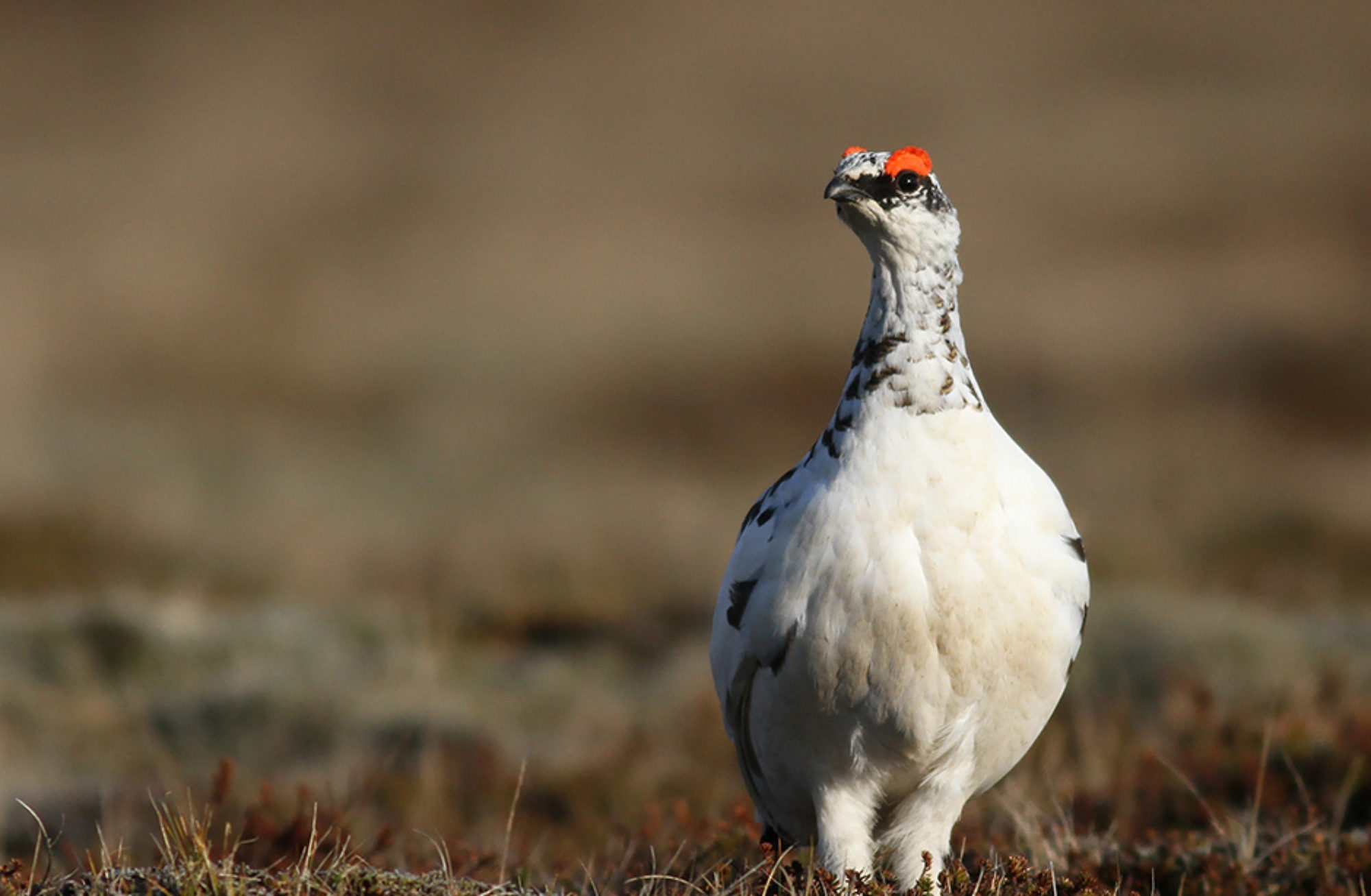
Picture: Willow ptarmigan (photo credit: Lawrence Hislop, Norwegian Polar Institute)