Small but mighty: structures created by small mammals affect C and nutrient cycling in arctic tundra

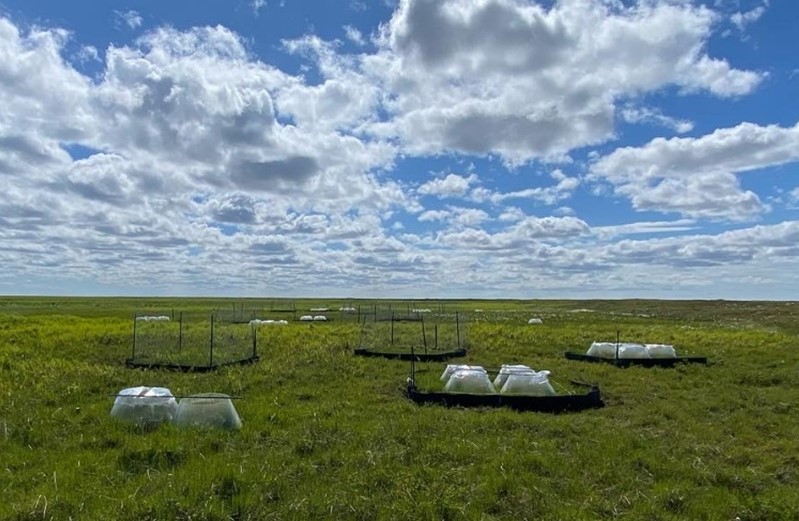
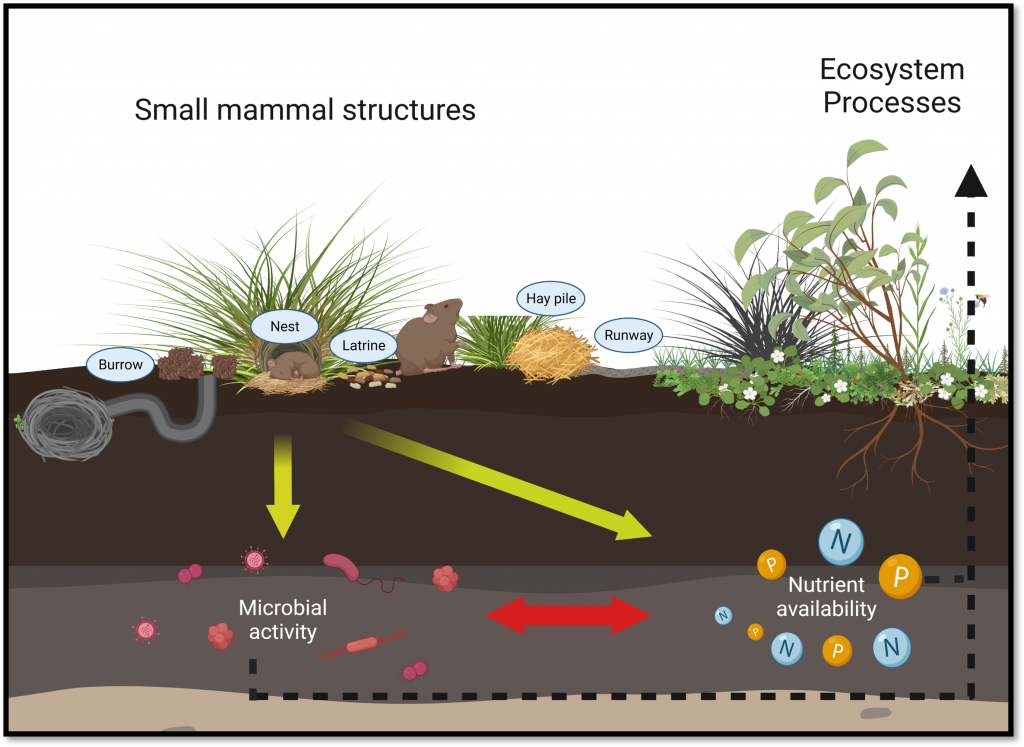
While typically thought of as having top-down roles in ecosystems, small mammal herbivores bottom-up roles are often underappreciated. As structure builders, small mammals can impact ecosystem function through alterations of soil nutrient cycling. We examined the effects of small mammal-built structure types (hay piles, runways, latrines) on soil and plant biogeochemical cycling across three tundra ecosystems in northern Alaska.

We found that structures play important roles in regulating soil nitrogen levels, regardless of tundra ecosystem. However, different structures influence soil nutrients in different ways. Hay piles increased soil N and plant P, while latrines influenced soil C, N, and P, and runways mainly affected soil N. We also found strong changes in the cover of structures on tundra during different phases of the small mammal population cycle.

Structures built by small mammals have the ability to increase or decrease biogeochemical cycling rates and arctic ecosystem function. Additionally, changes in the abundance of these structures may create pulses of resource availability during the high phase of the population cycle or may aid in maintaining ecosystem function when animals are rare on the landscape. Our work highlights the roles that small mammals play in the bottom-up regulation of tundra ecosystems and the need to include small mammals in our understanding of ecosystem function.   

You can read the full paper here: https://doi.org/10.1111/1365-2435.14127

Reference: Roy, A., Gough, L., Boelman, N.T., Rowe, R.J., Griffin, K.L. and McLaren, J.R., 2022. Small but mighty: Impacts of rodent‐herbivore structures on carbon and nutrient cycling in arctic tundra. Functional Ecology.


Text: Austin Roy, University of Texas at El Paso. This paper is a contribution of Team Vole, a group of collaborative scientists seeking to understand the impacts of small herbivores on carbon and nutrient cycling in tundra ecosystems.

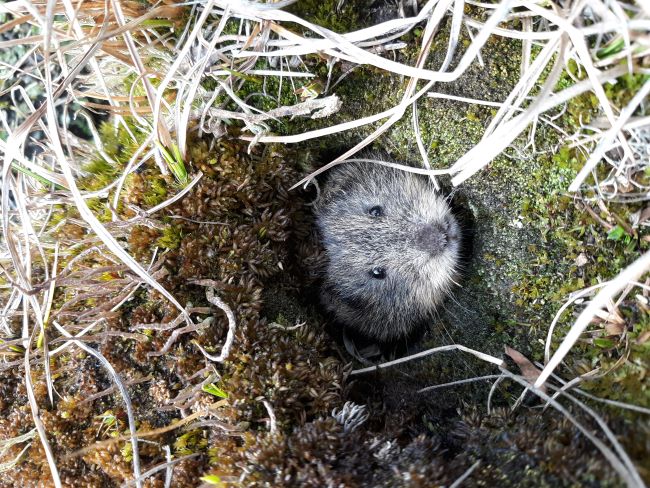
Photo credit: Luke Johnson

Herbivore species co-existence in changing rangeland ecosystems

Northern rangelands are changing fast, and these changes can have profound consequences to species coexistence and management.

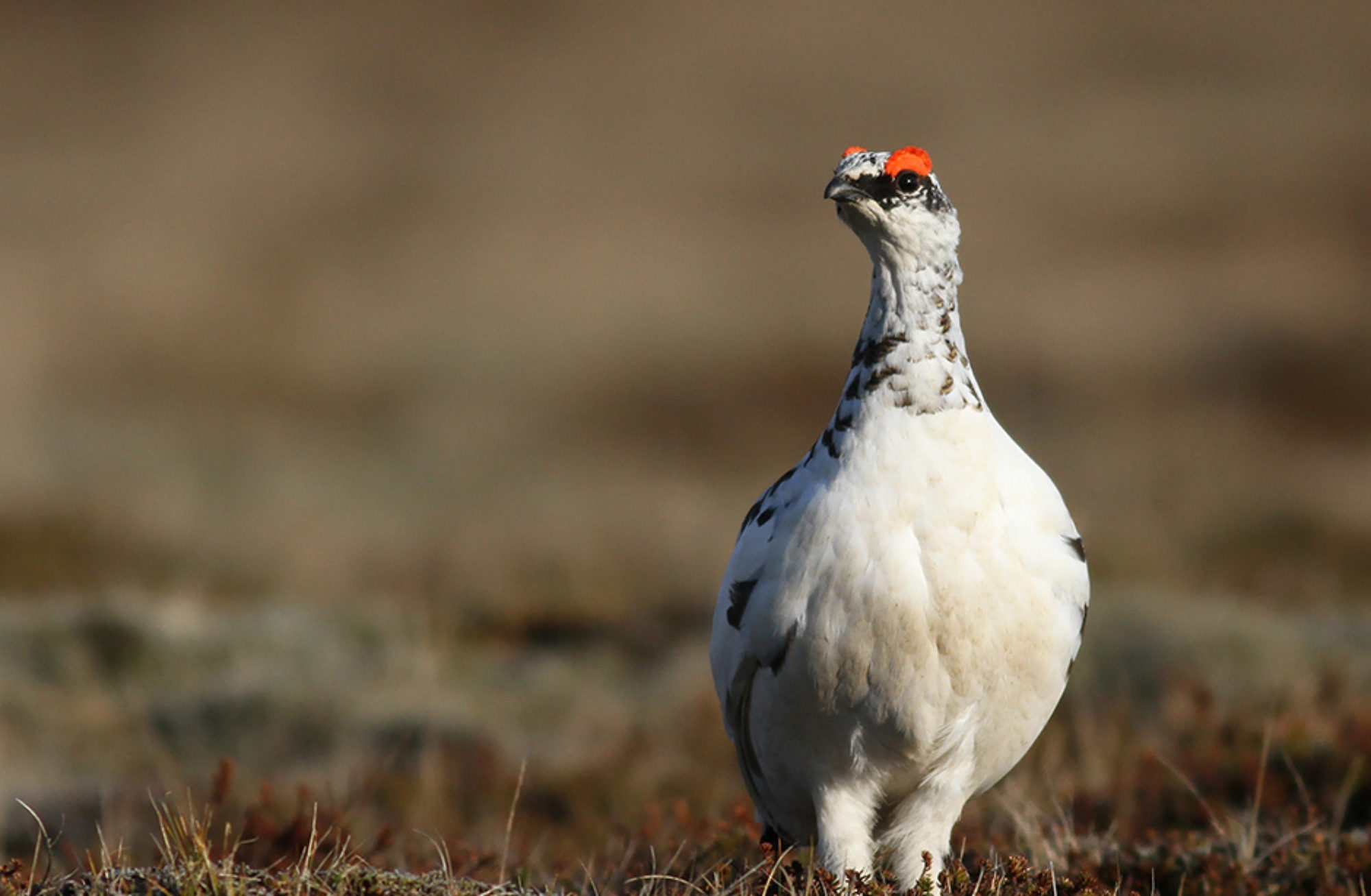
In their recent paper, Noémie Boulanger-Lapointe and collaborators compiled occurrence data for the main vertebrate herbivore species present in the highlands of Iceland (sheep, reindeer, pink-footed goose and rock ptarmigan). They used an ensemble model workflow to analyse their distribution and its drivers and produced the first high-resolution national open-source and open-access models for Iceland.

The analyses show that vegetation productivity and soil type were the main drivers of herbivore species diversity across Iceland. The overlapping distributions of sheep and geese point out the potential for wildlife-livestock conflicts and for continued ecosystem degradation at higher elevations even under declining livestock abundance.

Compiling data on herbivore occurrence across Iceland was not a trivial task. Data sources ranged from GPS collar data to citizen science observations and span a long period of time (1861-2021). The data compilation provides the most extensive database on herbivore distribution in Iceland. Together with the open-access modelling workflow, such dataset provides a framework for transparent and repeatable science-based management decisions.

You can read the full paper here: https://www.sciencedirect.com/science/article/pii/S0048969722042371

Reference: Boulanger-Lapointe, N., Ágústsdóttir, K., Barrio, I.C., Defourneaux, M., Finnsdóttir, R., Jónsdóttir, I.S., Marteinsdóttir, B., Mitchell, C., Möller, M., Nielsen, Ó.K. and Sigfússon, A.Þ., 2022. Herbivore species coexistence in changing rangeland ecosystems: First high resolution national open-source and open-access ensemble models for Iceland. Science of The Total Environment, p.157140.


This paper was part of Noémie’s postdoc project funded by the University of Iceland and is a contribution to the TUNDRAsalad project

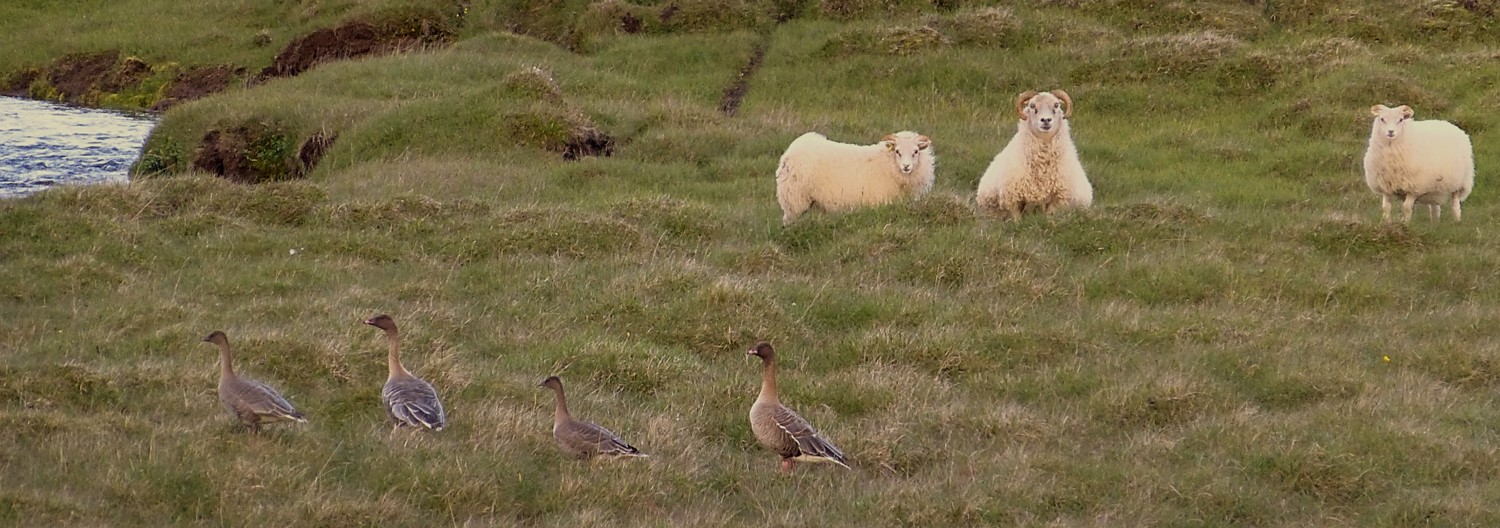
Photograph: Sheep and pink-footed geese in Iceland (photo: Maite Gartzia)

Field assistant in the Eastern Icelandic Highlands

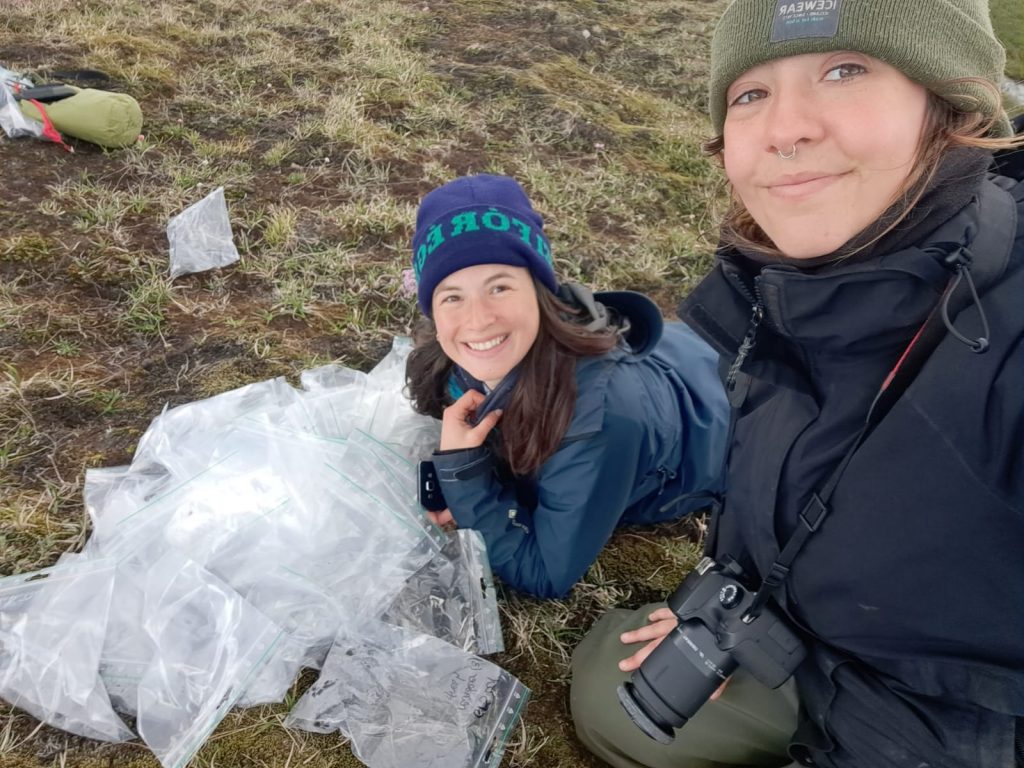
Mathilde Defourneaux is looking for a field assistant from the 25th of August to the 10th of September 2022. The field assistant will help collect data for Mathilde’s PhD project which is part of a bigger international project (TUNDRAsalad), looking at the effect of changes in herbivore communities on the functionality of the Tundra. The PhD focuses on Iceland and aims to: 1) estimate the contribution of the different herbivores to the nutrient pool in the Icelandic highlands (how much nutrients they contribute to the system and how their movement is actively affecting the nutrient redistribution in the landscape), and 2) investigate how different sources of dung can affect dung decomposition and the nutrient transfer to the soil, as well as the invertebrates communities feeding on them. 

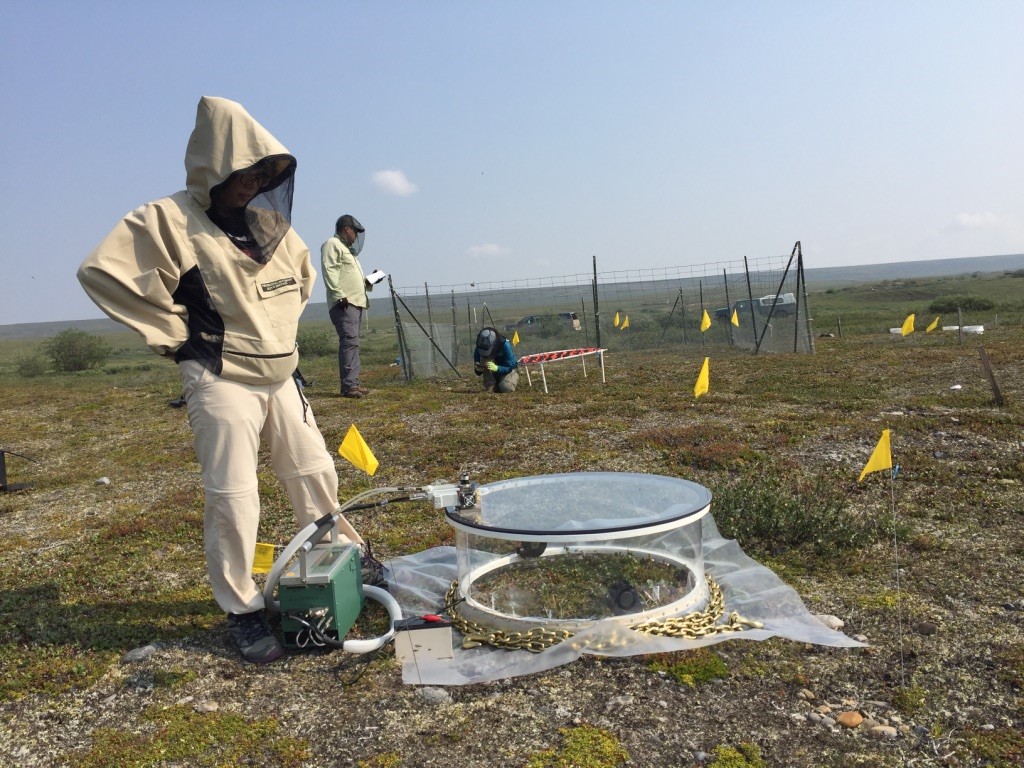
Fieldwork is conducted in the Eastern highlands, mainly in Fljótsdalshreppur and focuses on 4 main herbivore species (reindeer, sheep, pink footed goose and whooper swan). It involves various protocols from plants, soil and dung sampling for both nutrient and DNA analysis, as well as estimating primary productivity and herbivore offtake using point frame and exclusion cages. There is also an experiment set up to sample coprophagous invertebrates feeding on sheep and goose dung to estimate invertebrate contribution to dung removal. All fieldwork is conducted in the highlands of Iceland under various weather conditions, and it involves camping or staying in little huts, which can be challenging.

If anyone is interested, please contact Mathilde by email or reach her on her phone number (+354 8435313). She will be very happy to give you more details 🙂

Fieldwork in the Icelandic highlands

Master’s of Science in geospatial analyses of plant-herbivore interactions in Iceland, Department of Geography, University of Victoria

Deadline: August 1, 2022

We are seeking applications for a Master’s student to conduct geospatial analyses to document the cumulative impact of wild and domesticated herbivores in the highlands of Iceland and contribute to the development of tools for sustainable land management. The ideal candidate will have experience in geospatial analyses and a willingness to conduct fieldwork in remote sites in Iceland. Applicants will be expected to have a relevant Bachelor’s degree completed no later than May 2023 and be available to conduct fieldwork in summer 2023. The work will be conducted in collaboration with an international and interdisciplinary team of scientists, students and government partners. The position will be jointly supervised by Dr. Noémie Boulanger-Lapointe (UVic Geography) and Dr. Isabel C. Barrio (Agricultural University of Iceland).

Interested applicants should send a cover letter, CV and contact information for two references to Noémie Boulanger-Lapointe no later than August 1st, 2022. Cover letters should identify their motivations and highlight how previous academic and/or work experience are related to the advertised position. 

HN activities at the NSO meeting 2022

As you might know, the Nordic Society Oikos 2022 will be held in Arhus (Denmark) from the 7th to the 11th of June.

On Tuesday 7th of June Laura Barbero-Palacios will lead a workshop about the Systematic Review she is conducting for the TUNDRAsalad project (more info here). She will present how the systematic review is going and then workshop participants will code some papers for the review. The workshop will be in person but virtual participation is also possible. Send an email to Laura if you want to participate! (laura@lbhi.is).

In addition, some colleagues will be presenting the Herbivory Network Pellet ID Project. The goal of the project is to create a photo database of herbivore pellets in Arctic and Alpine ecosystems, with associated environmental data and the opportunity to include lab confirmation results. You can read more about it in their iNaturalist project. They will have a kiosk next to the poster presentations on Tuesday 7th. The project is in the early stages, so any feedback is more than welcome!

We will also have an informal get together on Wednesday evening. Feel free to join us for some herbivore-related discussions over dinner!

Support for Early Career Scientists to attend this meeting was provided by the UiT The Arctic University of Norway UArctic Project grants 2021.

ZAX herbivory trainer

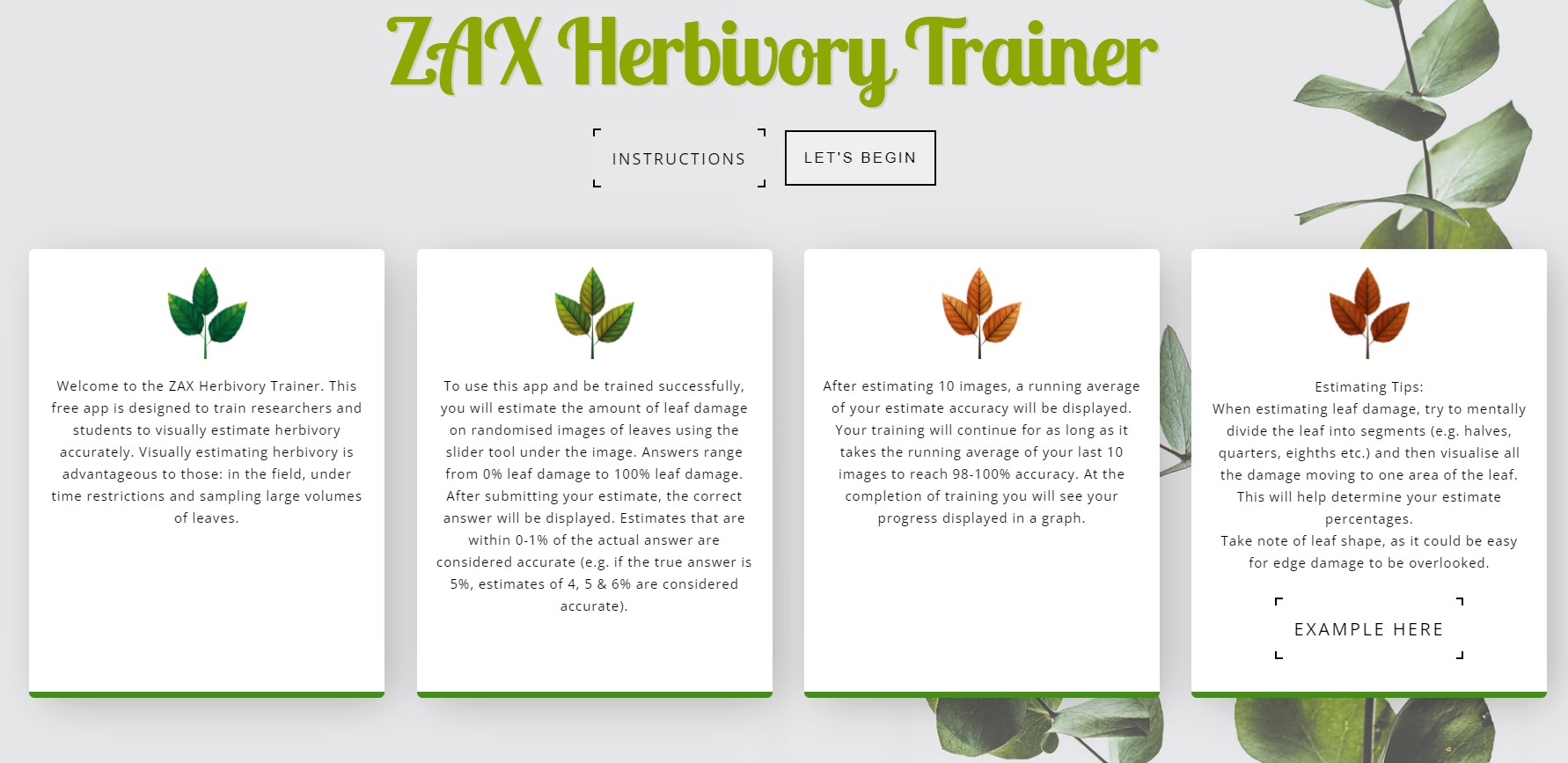
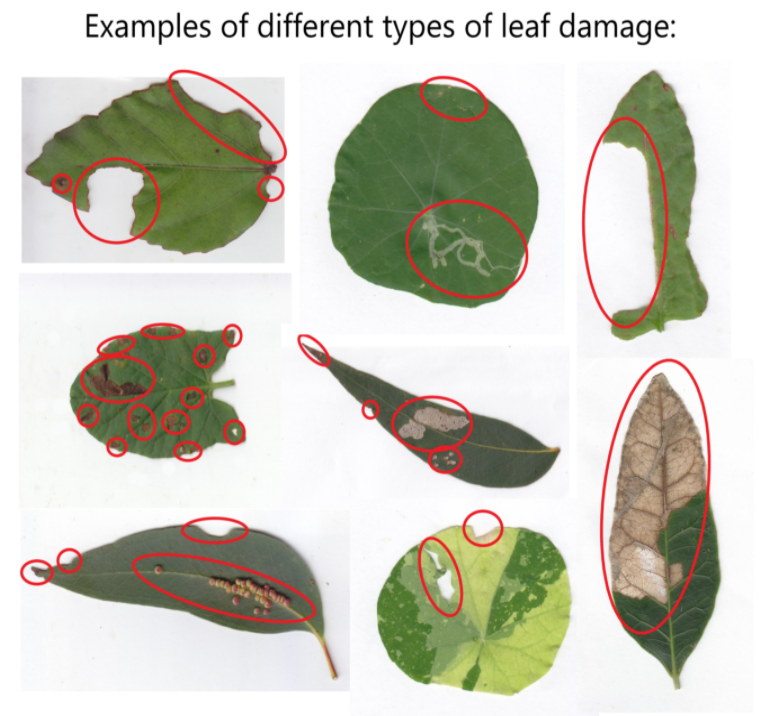
Zoe Xirocostas and Angela Moles at the University of New South Wales have developed a great app for training researchers to visually estimate leaf damage. We recommend all of you to have a look, and train yourself before you estimate leaf damage in the field 😊

The app presents randomised images of leaves with different amounts of damage. You have to visually estimate damage on those leaves using a slider tool under the image. After submitting your estimate, the correct answer is displayed. Estimates that are within 0-1% of the actual answer are considered accurate. After estimating 10 images, a running average of your estimate accuracy is displayed. Your training will continue until the running average of your last 10 images reaches 98-100% accuracy. Once you have completed your training you will see your progress displayed in a graph.

The app can be found here: ZAX Herbivory Trainer

Growth rings show limited evidence for ungulates’ potential to suppress shrubs across the Arctic

Herbivores may counteract climate warming impacts on tundra by reducing plant growth. However, the strength of this effect may depend on prevailing climatic conditions. To study how ungulates interact with temperature to influence growth of tundra shrubs across the Arctic tundra biome, we assembled dendroecological data from 20 sites, comprising 1,153 individual shrubs and 22,363 annual growth rings.

Interestingly, evidence for ungulates suppressing shrub growth was only observed at intermediate summer temperatures, and even at these temperatures the effect was minor. Forage preferences and landscape use of the ungulates may explain these results, as well as favorable climatic conditions that may enable effective compensatory growth of shrubs. Earlier local studies have shown that ungulates may counteract the impacts of warming on tundra shrub growth, but we demonstrated that ungulates’ potential to suppress shrub growth is not always evident and may be limited to certain temperature and precipitation conditions.

Reference: Vuorinen, K., Austrheim, G., Tremblay, J.-P., Myers-Smith, I.H., Hortman, H.I., Frank, P., Barrio, I.C., Dalerum, F., Björkman, M.P., Björk, R.G., Ehrich, D., Sokolov, A., Sokolova, N., Ropars, P., Boudreau, S., Normand, S., Prendin, A.L., Schmidt, N.M., Pacheco, A., Post, E., John, C., Kerby, J.T., Sullivan, P.F., Le Moullec, M., Hansen, B.B., Van der Wal, R., Pedersen, Å.Ø., Sandal, L., Gough, L., Young, A., Li, B., Magnússon, R.Í., Sass-Klaassen, U., Buchwal, A., Welker, J.M., Grogan, P., Andruko, R., Morrissette-Boileau, C., Volkovitskiy, A., Terekhina, A., Speed, J.D.M., 2022. Growth rings show limited evidence for ungulates’ potential to suppress shrubs across the Arctic. Environmental Research Letters. https://iopscience.iop.org/article/10.1088/1748-9326/ac5207/meta


This paper is a contribution to the DISENTANGLE project and was included as one of the chapters of Katariina’s PhD at the Norwegian University of Science and Technology.

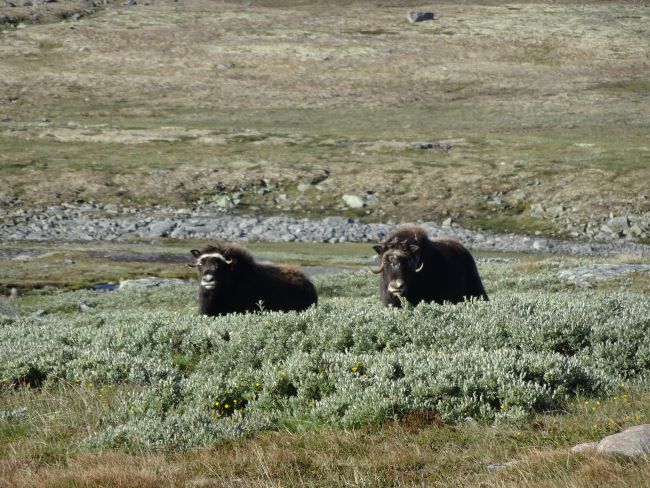
Photograph: Muskoxen (Ovibos moschatus) in a willow patch (photo: Katariina Vuorinen)

Call for help with microhistological analyses of reindeer diet

photo: Eeva Soininen

Stefaniya Kamenova and collaborators are currently trying to elucidate possible methodological biases in the assessment of diet in large herbivores. This is motivated by our recent observation that considerable discrepancies occur in the estimation of dietary proportions in the Svalbard reindeer according to the method used (i.e. DNA metabarcoding, microhistology, stable isotope analysis…). Consequently, we aim at comparing these three methods using samples from the very same individuals, collected at the same time.

While we have a rather good grasp of the DNA metabarcoding and stable isotope methods, microhistology remains a technique requiring very specific training. Therefore, our call is for collaborators trained in the microhistological analysis of herbivore diets, to help us with the screening of 96 rumen and faecal Svalbard reindeer samples.

If you have the expertise and certain interest for this iconic Arctic herbivore, please get in touch with Stefaniya.


Photo: Svalbard reindeer (Eeva Soininen)

A protocol for conducting a systematic review on the effects of herbivore diversity on tundra ecosystems

How do the effects of different herbivores combine to affect tundra ecosystem? This is the question we want to address with a new systematic review. This project builds on earlier work by Herbivory Network members where we compiled available evidence on effects of herbivores on tundra vegetation using a systematic map (Soininen et al, 2021). The systematic review will expand this effort beyond tundra vegetation to include other ecosystem components as well, and will focus on studies that compare areas with different herbivore diversity.

Following the guidelines of the Collaboration for Environmental Evidence (CEE), the process of the systematic review involves two steps: developing a systematic review protocol (that is then peer-reviewed and published), and using that protocol to conduct the actual systematic review. A smaller group of authors has been developing the protocol, that has now been published in Environmental Evidence. We have also started to work on the systematic review. There is still time if you want to get involved in this project! See here the call for collaboration, and contact Laura Barbero-Palacios for more information.

You can access the full text here.

Reference: Barrio, I.C., Barbero-Palacios, L., Kaarlejärvi, E., Speed, J.D.M., Heiðmarsson, S., Hik, D.S., Soininen, E.M. (2022) What are the effects of herbivore diversity on tundra ecosystems? A systematic review protocol. Environmental Evidence 11:1. https://doi.org/10.1186/s13750-022-00257-z

This project is a contribution to the TUNDRAsalad and CHARTER projects.

Will borealization of Arctic tundra herbivore communities be driven by climate warming or vegetation change?

Arctic ecosystems are changing fast, and these changes involve both plant and herbivore communities. Poleward shifts of species distributions, termed borealization when referring to northward movements of boreal species into tundra, have been observed and are expected to continue. Increasing greenness, shrubification and treeline advance in Arctic ecosystems have been associated with warming trends. Vertebrate herbivores have the potential to limit greening and shrub advance and expansion on the tundra, posing the question of whether changes in herbivore communities could partly mediate the impacts of climate warming on Arctic tundra. Therefore, future changes in the herbivore community in the Arctic tundra will depend on whether the community tracks the changing climates directly (i.e. occurs in response to temperature) or indirectly, in response to vegetation changes (which can be modified by trophic interactions).

We used biogeographic and remotely sensed data to quantify spatial variation in vertebrate herbivore communities across the boreal forest and Arctic tundra biomes and assess whether borealization of vertebrate herbivore communities is a direct response to warming temperatures, or an indirect response through changing vegetation. We then tested whether present-day herbivore community structure is determined primarily by temperature or vegetation.

The composition of herbivore communities across the biome boundary between the boreal forest and the tundra is mainly driven by temperature, rather than vegetation productivity and woody plant cover.

We found that vertebrate herbivore communities are significantly more diverse in the boreal forest than in the Arctic tundra in terms of species richness, phylogenetic diversity and functional diversity. A clear shift in community structure was observed at the biome boundary, with stronger northward declines in diversity in the Arctic tundra. Interestingly, important functional traits characterizing the role of herbivores in limiting tundra vegetation change, such as body mass and woody plant feeding, did not show threshold changes across the biome boundary. The composition of herbivore communities was mainly driven by temperature rather than by vegetation productivity or woody plant cover. Thus, our study does not support the premise that herbivore-driven limitation of Arctic tundra shrubification or greening would limit herbivore community change in the tundra. Instead, borealization of tundra herbivore communities is likely to result from the direct effect of climate warming.

You can access the full text here.

Reference: Speed, J.D., Chimal‐Ballesteros, J.A., Martin, M.D., Barrio, I.C., Vuorinen, K.E. and Soininen, E.M., 2021. Will borealization of Arctic tundra herbivore communities be driven by climate warming or vegetation change?. Global Change Biology27(24):6568-6577.


Photo: reindeer grazing (photo by Hannes Skarin)