Ecological
monitoring requires sustained, coordinated efforts. We need to standardize what and how we measure
so that data are comparable across sites and over time. Further, if monitoring is to be carried out
across vast and remote areas like the circumpolar North, it is critical that protocols
for data collection are simple and repeatable by different observers.
Say for example that we want to
measure herbivory across the Arctic. An
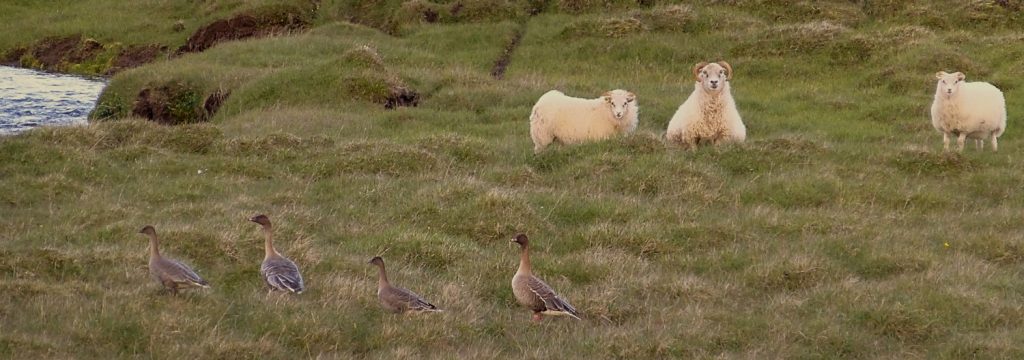
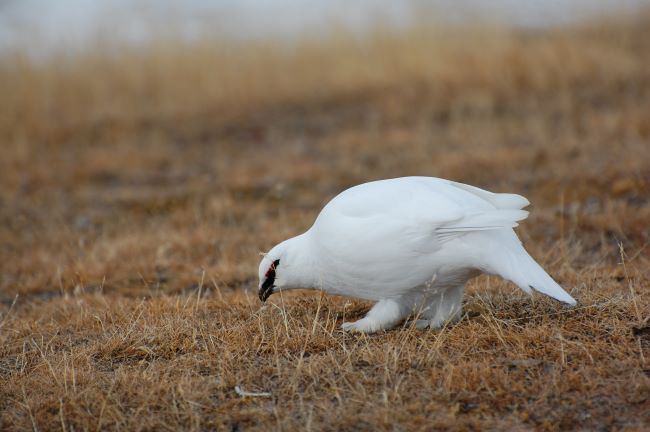
additional challenge is that herbivores range from small invertebrates with
relatively localized impacts to wide-ranging large mammals, so sampling
protocols need to be developed at different spatial scales. In a paper recently published in Arctic
Science we applied and assessed standardized protocols to measure tundra
herbivory at three spatial scales: plot, site (habitat), and study area
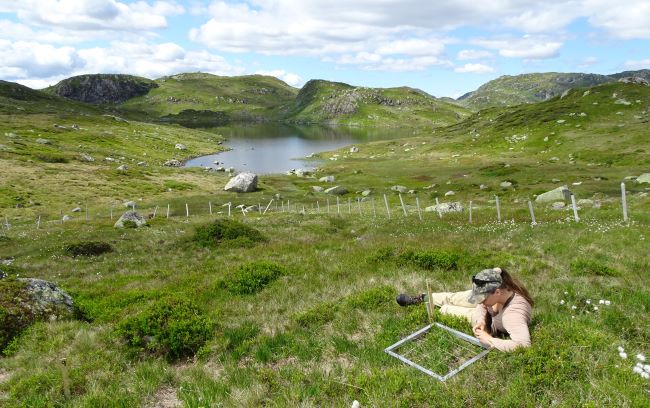
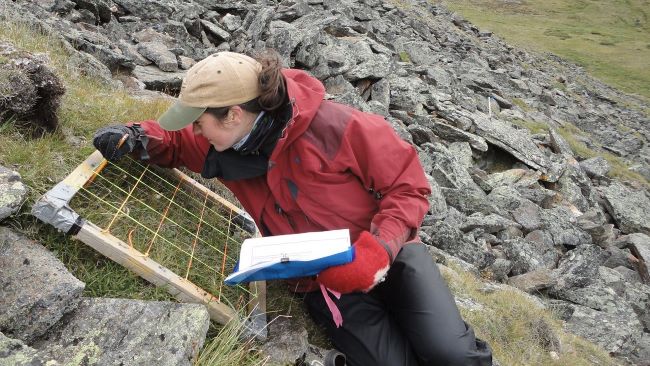
(landscape). The plot and site-level
protocols build off earlier efforts of the Herbivory Network to design
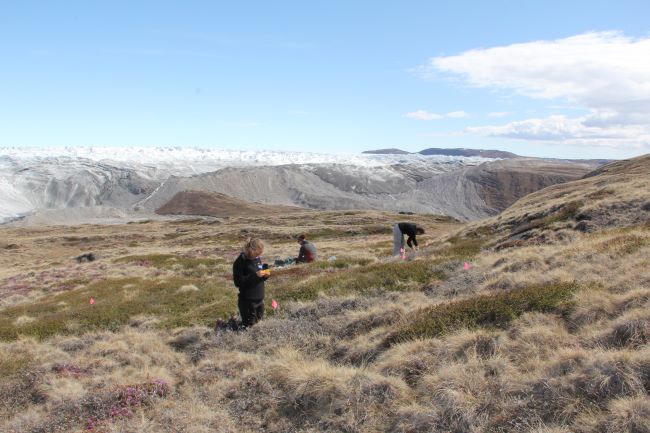
comparable protocols to measure herbivory across sites of the International Tundra Experiment (ITEX). These protocols were tested in the field
during summers 2014-2015 at eleven sites, nine of them comprising warming
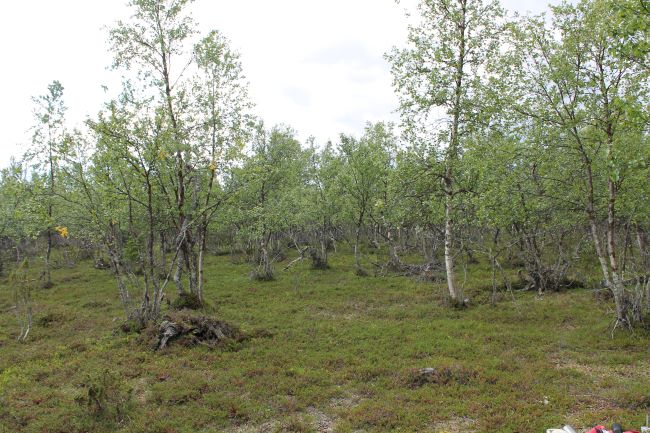
experimental plots included in the ITEX network. The study area protocols are largely based on
pellet counts and were assessed during 2014-2018 at 24 study areas across the Arctic, many of them belonging
to the Interactions
Working Group (IWG).
Our protocols provide comparable and easy-to-implement methods for assessing the intensity of invertebrate herbivory within smaller sampling plots and for characterizing vertebrate herbivore communities at larger spatial scales. The aim of these protocols is that they can be readily used to obtain comparable estimates of herbivory, both at ITEX sites and at large landscape scales. The application of these protocols across the tundra biome will allow characterizing and comparing herbivore communities across tundra sites and at ecologically relevant spatial scales, providing an important step towards a better understanding of tundra ecosystem responses to large-scale environmental change.
Reference: Barrio, I.C., Ehrich, D., Soininen, E.M., Ravolainen, V.T., Bueno, C.G., Gilg, O., Koltz, A.M., Speed, J.D.M., Hik, D.S., Mörsdorf, M., Alatalo, J.M., Angerbjörn, A., Bêty, J., Bollache, L., Boulanger-Lapointe, N., Brown, G.S., Eischeid, I., Giroux, M.A., Hájek, T., Hansen, B.B., Hofhuis, S.P., Lamarre, J.-F., Lang, J., Latty, C., Lecomte, N., Macek, P., McKinnon, L., Myers-Smith, I.H., Pedersen, Å.Ø., Prevéy, J.S., Roth, J.D., Saalfeld, S.T., Schmidt, N.M., Smith, P., Sokolov, A., Sokolova, N., Stolz, C., Van Bemmelen, R., Varpe, Ø., Woodard, P.F., Jónsdóttir, I.S. (2021) Developing common protocols to measure tundra herbivory across spatial scales. Arctic Science https://doi.org/10.1139/AS-2020-0020